A ceremony is eight parts, and you choose which ones you want
Wedding ceremonies look mysterious from the outside and are extremely simple once you see the structure. There are eight standard components, they run in a fixed order, and you can include or drop almost any of them.
Processional, welcome, reading, vows, rings, unity ritual, pronouncement, closing. Tick the ones you want and the script assembles itself in the right order, with stage directions in square brackets so your officiant knows when to pause and when people move.
Six styles change the actual language rather than just the label: traditional, modern, romantic, humorous, interfaith and non-religious. A humorous ceremony and a traditional one open on completely different sentences.
- Processional — how everyone gets to the front
- Welcome — why everyone is here
- Reading — chosen by you, delivered by someone you love
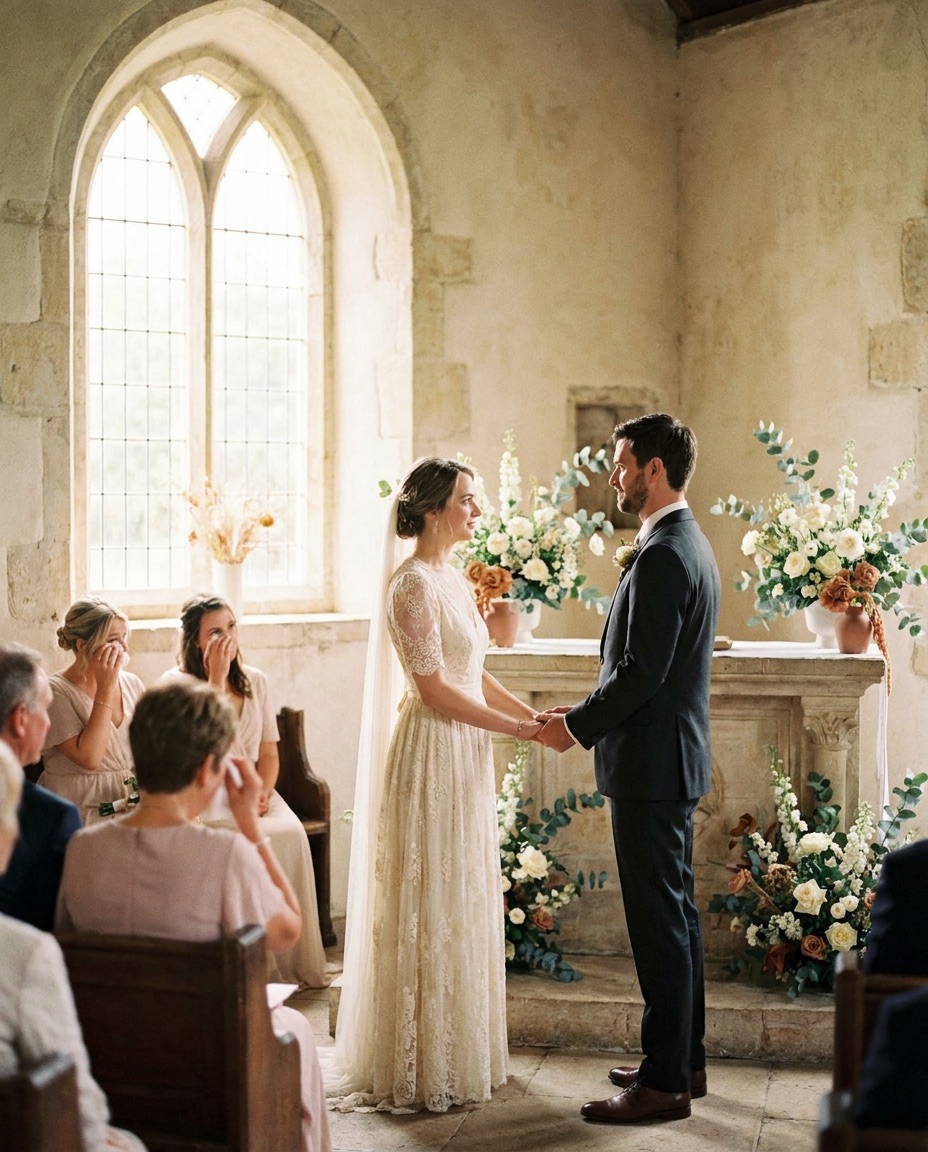
- Vows — the legal and emotional centre
- Rings — the physical symbol
- Unity ritual — optional, and often meaningful for blended families
- Pronouncement — the sentence that changes your status
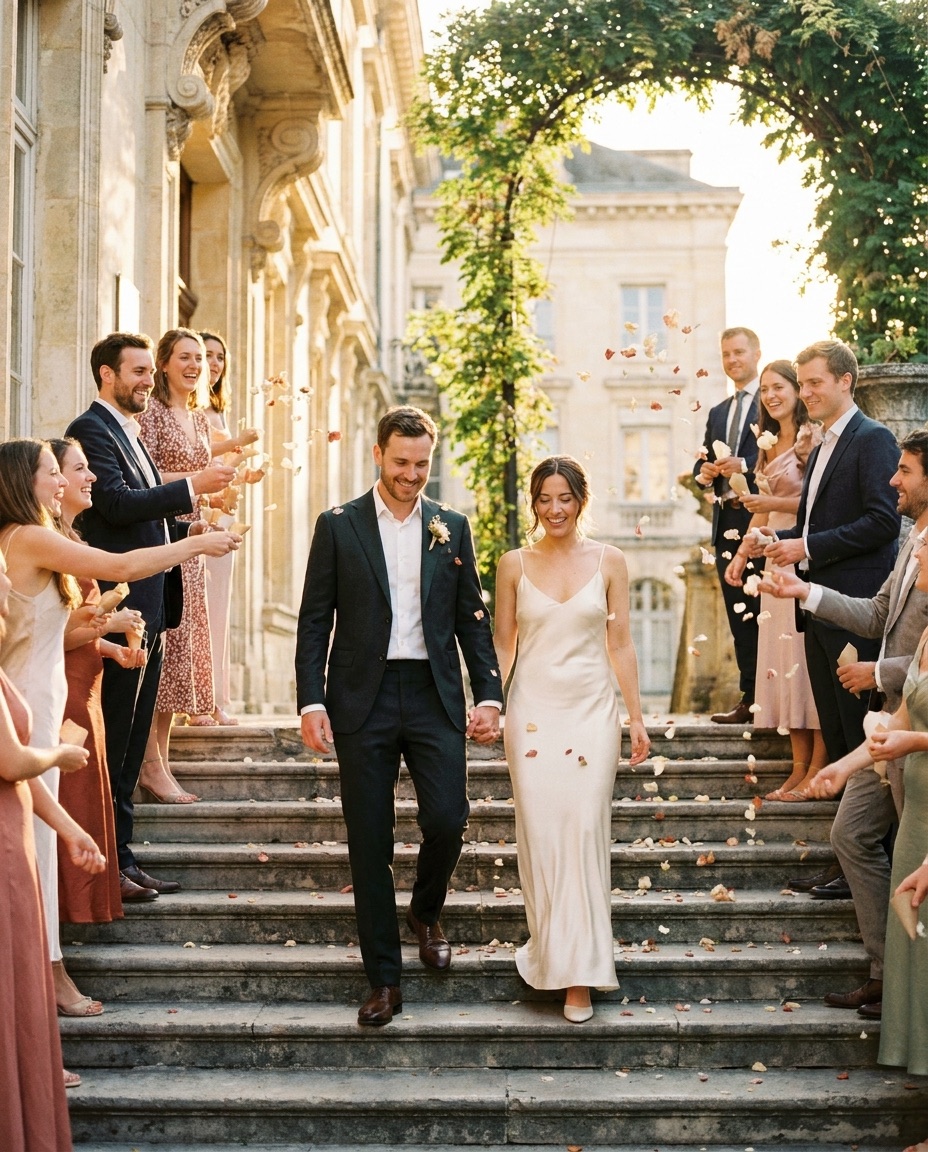
- Closing — the blessing and the walk back out
How long should a wedding ceremony be?
Twenty to thirty minutes for most ceremonies. Under fifteen feels rushed, and much over forty and your guests start shifting in their seats, particularly if they are outdoors, standing, or in the sun.
The run time shown with your script is calculated from the spoken word count at a calm delivery pace, plus a realistic allowance per section for pauses, movement and the moments where nobody says anything. That second part is what most estimates miss: a ceremony is mostly not talking.
If you are having a full religious service, expect longer and plan the rest of the day around it. If you are having a short civil ceremony, twelve to fifteen minutes is completely normal and nobody will feel short-changed.
The legal part is separate from the lovely part
This is the thing that catches couples out, and it is worth being clear about. A ceremony script is the shape of your ceremony; it is not what makes you married.
In England and Wales you must give notice at a register office, there is a statutory waiting period, and certain declaratory and contracting words must be said for the marriage to be legal. Those words are not optional and they are not something you can rewrite for style. Scotland and Northern Ireland have their own rules; so does every US state, and requirements vary by county.
The practical answer is simple: write the ceremony you want, then send this script to your registrar, officiant or celebrant and ask them to confirm the legal wording is present and correctly placed. Many couples do the legal part quietly at a register office and keep the ceremony entirely for the words they actually care about.
Choosing a style that fits the people in the room
Traditional works when either family expects a recognisable ceremony, and it carries weight precisely because the language is familiar. Modern strips out anything nobody means, which suits couples who find traditional wording hollow.
Romantic is warmer and more direct than traditional without being informal. Humorous is genuinely lovely with the right officiant and a disaster with the wrong one — it needs someone with timing, and it works best in short bursts between sincere passages rather than throughout.
Interfaith is written to hold two traditions side by side without subordinating either, which is usually what the families involved actually want. Non-religious is exactly that: warm, complete and with no religious language anywhere in it, which is what a humanist or civil ceremony needs.
Personalising it so it does not sound generic
Two changes make more difference than any amount of rewriting. First, have your officiant tell one specific story about you in the welcome — thirty seconds, one anecdote, ideally one that makes the room laugh. It converts a ceremony from a form into an event about two particular people.
Second, choose a reading that means something rather than one that scans well. A passage from a book one of you loves, read by someone who loves you, beats a famous poem chosen because it is the one people read at weddings.
Print the script in a large font, double-spaced, on numbered cards, and give a spare copy to whoever is running the day. Then walk it through at the rehearsal out loud, because that is where you discover the reading takes four minutes rather than one and that nobody knows who is holding the rings.
The ceremony is the part with the fewest photographs
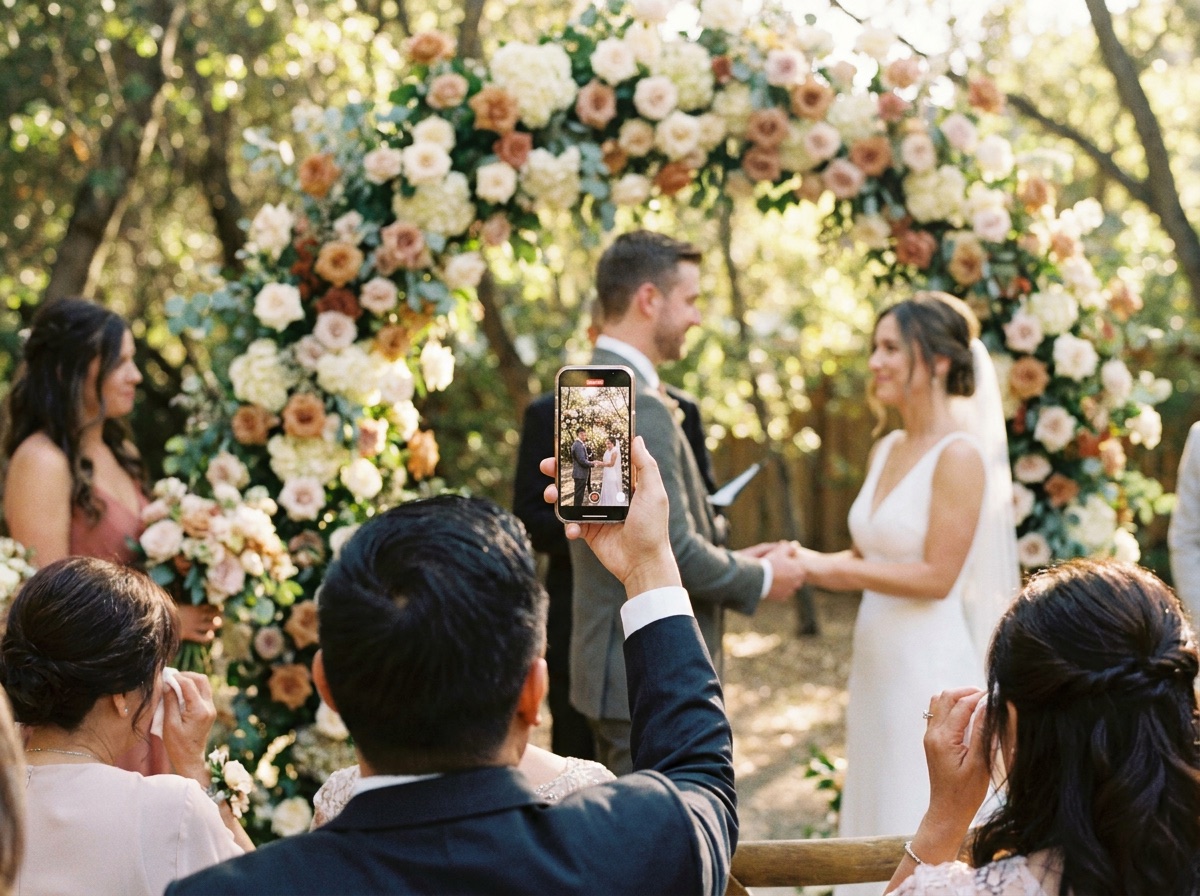
Here is the strange arithmetic of a wedding day. The ceremony is the reason everyone came, and it generates fewer photographs than any other hour of the day.
Your photographer is constrained by the space, by where they are allowed to stand, and often by an officiant who has asked them to stay at the back. They will get the aisle, the vows and the kiss. They will not get your ceremony from the fifth row, or your father's face, or the friend who came a very long way and cried through all of it.
A card on each seat with a QR code fixes this quietly. Guests scan it once, send what they took, and every angle in the room comes back to you at full quality. If you are having an unplugged ceremony, put the card out anyway with a line asking guests to keep phones away until after the vows — you get the undistracted ceremony and the photographs afterwards.
Questions, answered
How long should a wedding ceremony script be?
Most ceremonies run twenty to thirty minutes. Your script shows a run time calculated from the spoken words plus a realistic allowance for pauses and movement, which is usually the part people underestimate.
Can a friend officiate our wedding using this script?
They can lead the ceremony, but whether they can legally marry you depends entirely on where you are. Rules differ by country, and in the US by state and county. Check the local requirement first, then use this script for the ceremony itself.
Is the generated script legally valid?
The script sets the shape of your ceremony, not its legal status. Most jurisdictions require specific declaratory wording and advance notice. Send the script to your registrar, celebrant or officiant and ask them to confirm the required legal wording is present.
Do I need to include every ceremony element?
No. Every element is optional except the legally required wording where you are marrying. Many couples drop the unity ritual and the reading and end up with a tight, warm twenty-minute ceremony.
What is a unity ceremony?
A short symbolic ritual marking two lives or two families joining — candles, sand, handfasting, planting something, or sharing a drink. They are especially popular with blended families because children can take part.
What is the difference between traditional and modern scripts?
Traditional uses formal, familiar cadence and often religious framing. Modern uses plain contemporary language and deliberately drops phrases nobody means. Both cover the same eight components.
Should the officiant memorise the script?
No. Officiants read, and everyone expects it. Print it large, double-spaced, on numbered cards, and give a spare copy to whoever is coordinating the day.
Can we use this for a vow renewal?
Yes, and it is a good fit because vow renewals have no legal requirements at all. Drop the pronouncement, keep the vows and the closing, and add a reading.
Is the ceremony script generator free?
Yes. No account, no limit, and the script is generated in your browser — your names and choices are never sent anywhere.