Four details beat four hours of staring at a blank page
Almost everyone starts wedding vows the same way: a blank document, a cursor, and a slowly rising panic. The problem is never that you have nothing to say. It is that you have too much, and no structure to hang it on.
This generator gives you the structure. You supply the four things no template can invent — their name, how you met, the small specific thing only they do, and one promise in your own words — and it builds three complete drafts around them. Every draft has a proper opening, a story, a set of promises and a landing. Read them, steal the one that sounds like you, and rewrite the rest.
Nothing you type is sent anywhere. The whole thing runs in this browser tab, which is exactly what you want for the most private words you will ever say in public.
- Their name, spelled the way you say it
- How you met, even as a fragment
- One specific thing only they do
- One promise in your own words
- A style: romantic, funny, short, traditional or modern
The rule that makes vows land: specific beats poetic
The vows people remember are never the ones with the best vocabulary. They are the ones with the most specific detail. "I love your kindness" evaporates. "I love that you narrate what the dog is thinking" gets a laugh, then a lump in the throat, because it is unmistakably about one real person.
When you fill in the fields above, resist the urge to write something that sounds like a wedding. Write the thing you would text your best friend. The generator handles the rhythm and the shape; your job is to bring the detail nobody else in that room could have supplied.
The same rule governs the promise field. "I promise to love you forever" is a given — you are already at the altar. "I promise to always tell you when there is something in your teeth" is a vow, because it is a thing you will actually be held to on a Tuesday.
How long should wedding vows be?
Between one and two minutes each. Roughly 150 to 250 words. Every draft this tool produces shows its read-aloud time so you are not guessing.
Two minutes sounds short when you are writing and feels generous when you are standing up. Emotion slows you down, the pauses get longer, and a vow that read as ninety seconds at the kitchen table lands closer to two minutes in front of a hundred people. If your draft times at over three minutes, cut the second-best story rather than trimming words evenly across the whole thing.
Agree a rough length with your partner in advance. There is no faster way to make someone feel wrong-footed than following a four-minute vow with a forty-second one.
Vow styles, and who each one actually suits
The style selector changes the openings, the promises and the closing line, not just a coat of paint. Pick the one that matches how you two actually talk to each other, not the one that sounds most like a wedding.
- Romantic — warm, direct, unguarded. The default for a reason
- Funny — inside jokes and a soft landing, for couples who deflect with humour
- Short and sweet — under 90 seconds, ideal if you hate public speaking
- Traditional — formal cadence that sits comfortably in a religious or civil ceremony
- Modern — plain language, honest about the work, no fairytale promises
Read it out loud before you decide it is finished
Vows are spoken, not read. A sentence that looks elegant on screen can be unsayable out loud, especially when your hands are shaking. Read every draft aloud, at full volume, standing up. You will immediately hear which clauses are too long and which words you stumble over.
Then print it. Do not plan to read your vows off a phone: the screen dims, the notifications arrive, and holding a phone in your wedding photographs looks exactly as bad as it sounds. A folded card in your pocket, or a small vow book, is the version you will be glad about later.
Give a spare copy to whoever is standing next to you. On the day, someone will need it, and it will probably be you.
The part almost everyone forgets to plan
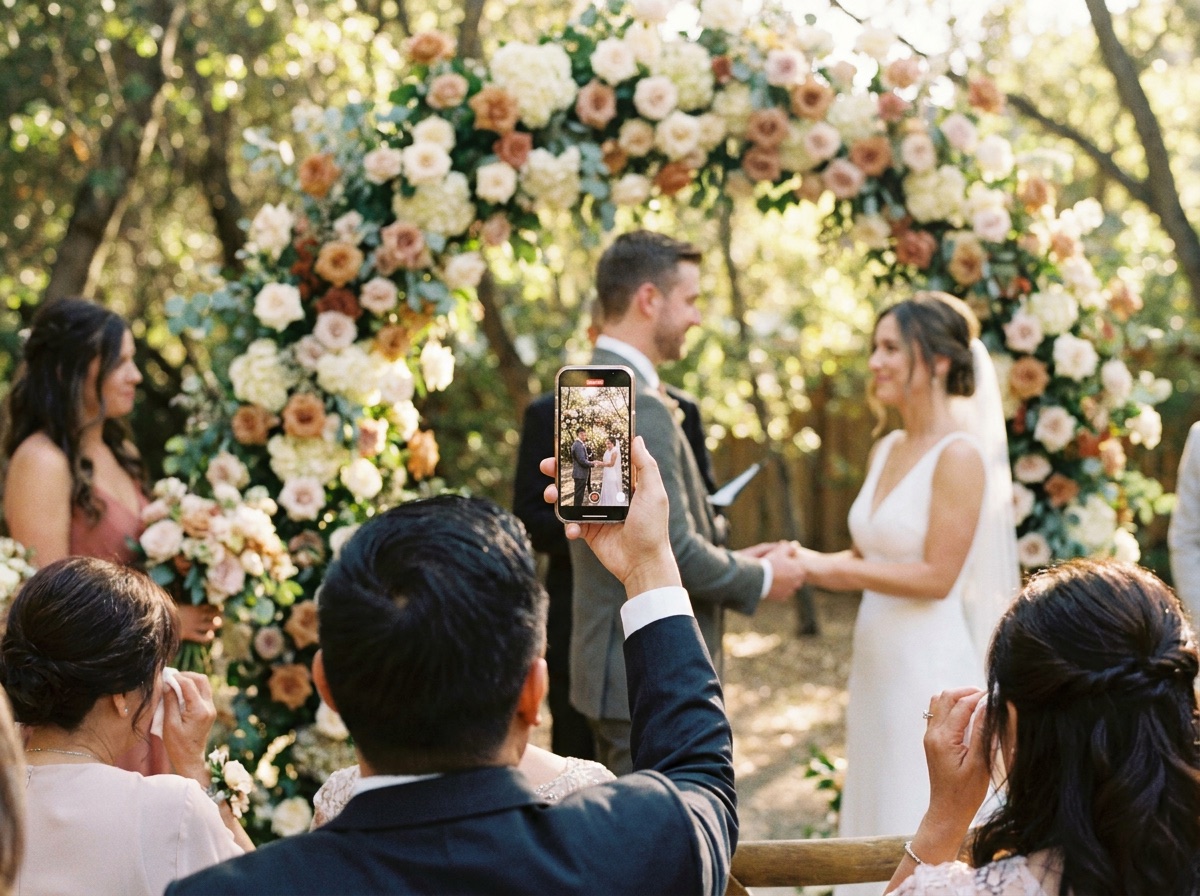
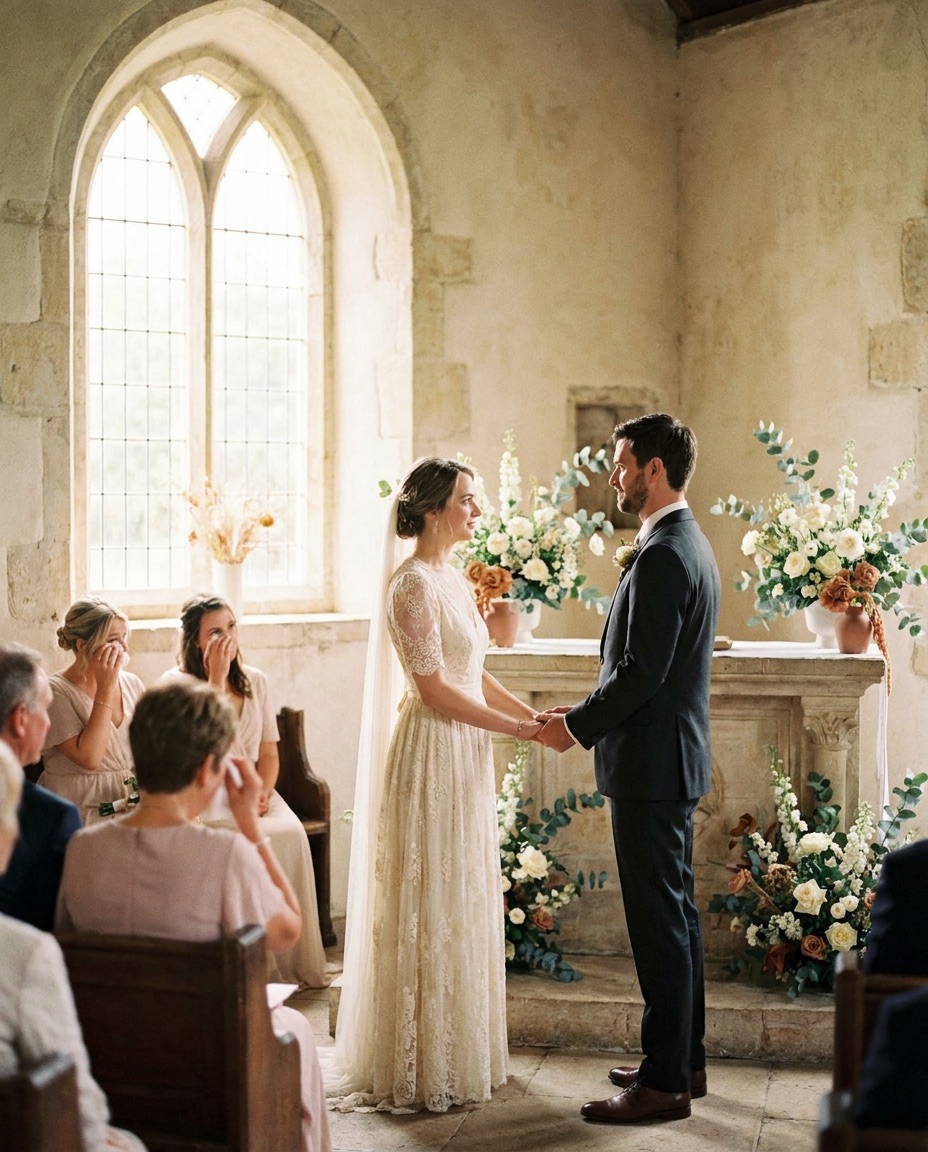
Your vows are the emotional centre of the entire day, and the professional photographer will be standing in exactly one place while you say them. They will get the shot from the aisle. They will not get your grandmother's face in the third row, or your best friend quietly falling apart at the back, or the view from where your brother is sitting.
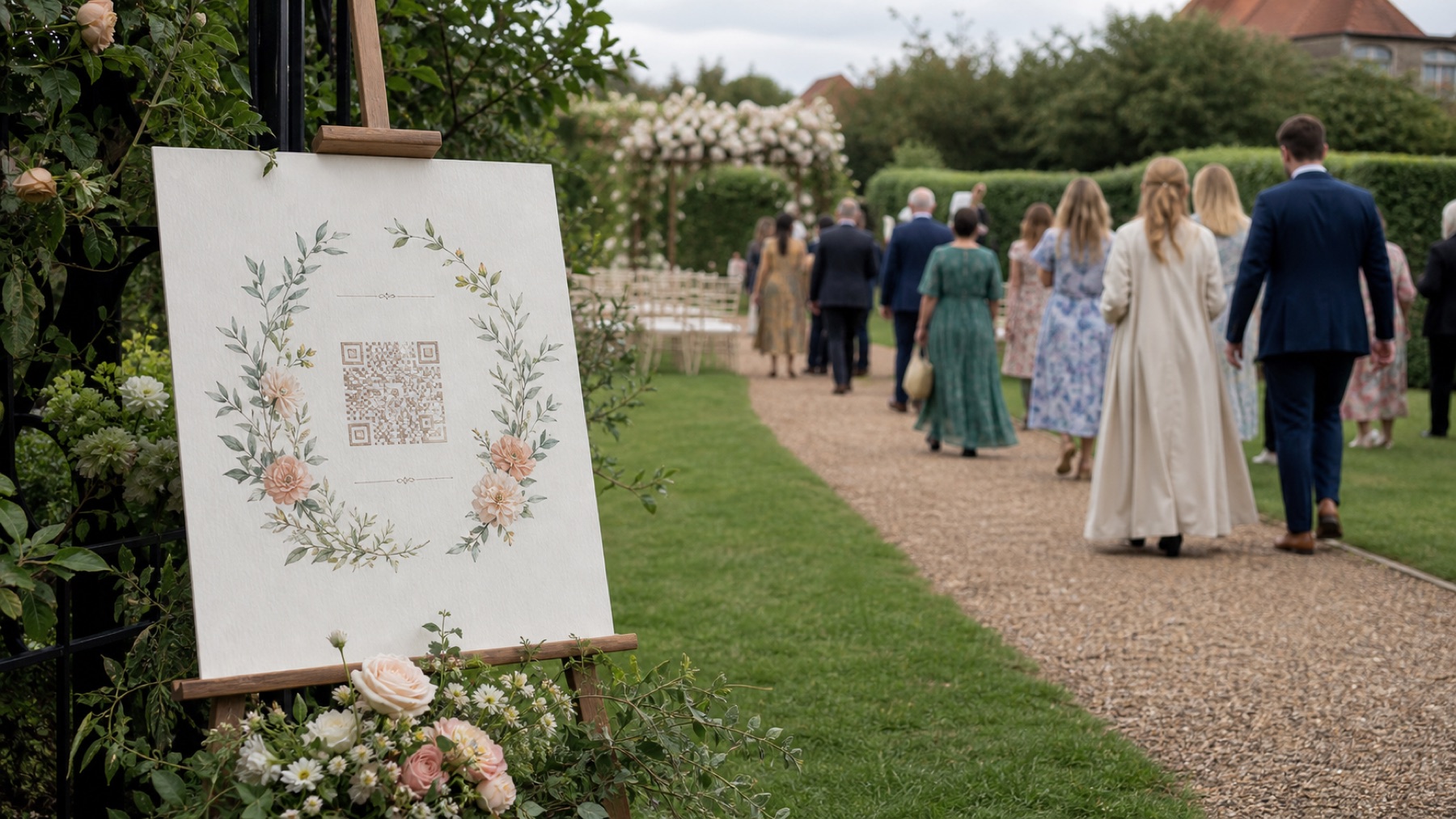
Those reactions are the photographs people cry at years later, and they are all sitting on your guests' phones. Set up one private album, put the link on a card at each seat, and every one of those angles comes back to you instead of disappearing into a hundred separate camera rolls.
Write the vows. Then make sure you get to see what the room looked like while you said them.
Questions, answered
Is this wedding vow generator free?
Yes. There is no account, no email address, no credit card and no usage limit. Generate as many drafts as you like.
How does the vow generator work, and is anything sent to a server?
Your details are woven into a large bank of vow openings, story framings, promises and closings, and assembled into complete drafts instantly. It all happens inside this browser tab — nothing you type leaves the page, and nothing is stored or logged.
Will another couple get the same vows as us?
The drafts are built around the details you type, so the sentences that carry your story are unique to you. The connecting structure is shared, which is why you should treat the output as a strong first draft and rewrite at least a line or two in your own words.
Can we use these vows in a religious ceremony?
The traditional style is written to sit comfortably alongside religious wording, and the non-specific styles avoid religious language entirely. Check the wording with your officiant, minister or imam first, because many faith traditions have required phrases that must appear.
How long should wedding vows be?
One to two minutes each, or roughly 150 to 250 words. Every draft shows its read-aloud time. Agree a rough length with your partner so one of you is not left following a speech with a sentence.
Should we write our vows together or separately?
Either works, but agree three things in advance: rough length, tone, and whether you will share drafts before the day. Surprise vows are lovely; mismatched vows are not.
Do I have to memorise my vows?
No, and you should not try. Nobody has ever been marked down for reading. Print them on a card you can hold, and give a spare copy to the person standing next to you.
What if I cry and cannot get through them?
Everyone expects it and nobody minds. Pause, breathe, and start the sentence again from the beginning rather than the middle. Short sentences are far easier to recover in, which is a good reason to keep your final draft simple.
Can I edit the drafts?
You should. Copy the draft you like best, then change at least a line or two so the words are recognisably yours. The generator is there to break the blank page, not to have the last word.