What Is a Wedding Guest Book and Why Couples Still Use One
Wondering what is a wedding guest book? Learn what it does, the traditional and digital formats couples use today, and how to pick the right one.

A wedding guest book is a shared record of who attended your wedding and what they wished for you, and 70% of couples choose some kind of guest book according to The Knot's 2025 Real Weddings Study. You may already be standing at a cousin's reception, signing a card table and wondering whether your own guest book will fill with heartfelt notes or sit untouched with blank pages.
The answer depends less on buying the prettiest book and more on designing a simple way for people to contribute. A guest book can be a leather-bound album, a set of prompt cards, a thumbprint artwork, an audio station, or a private digital album reached by QR code. Think of it as memory infrastructure, a small system that records attendance, identity, and personal messages alongside your photographs and video.
The right format should fit your guests, venue, and plans for revisiting the memories later. Below, you'll find the tradition's history, how the experience works on the wedding day, a paper-versus-digital comparison, practical prompt guidance, real planning scenarios, and answers to common questions.
Table of Contents
- What a Wedding Guest Book Really Is
- Where the Wedding Guest Book Came From
- How a Guest Book Actually Works on the Day
- Traditional and Digital Formats Compared
- Why QR and Audio Guest Books Are Trending in 2026
- How to Choose and Use the Right Guest Book
- Real Use Cases for Couples Planners and Venues
- Key Takeaways and Wedding Guest Book FAQs
What a Wedding Guest Book Really Is
At its simplest, a wedding guest book is a shared record of attendance and goodwill. Guests add their names, then leave a short message, congratulations, piece of advice, favourite memory, or wish for the couple. Some versions also invite contact details, predictions, drawings, photographs, voice notes, or video clips.
That makes the guest book more useful than a decoration placed near the entrance. It gives you a way to remember not only how the room looked, which your photographer captures, but also who was present and what they wanted you to remember. A photograph may show your grandmother smiling at the reception. Her handwritten note can preserve her words and handwriting in the same keepsake.
The basic contents
A traditional book usually contains:
- Names, so you can identify everyone who contributed.
- Short messages, from simple congratulations to personal stories.
- A date and occasion, which gives each entry context.
- Prompts or dedicated pages, if you want more than signatures.
- Photographs or creative additions, depending on the format.
A digital version performs the same job through a browser or app. Guests might type a message, upload an image, or record their voice, while remote friends and relatives can contribute without being physically present.
Practical rule: Choose the guest book based on what you want to remember, not only on what will look attractive on the signing table.
The tradition also doesn't require a formal hardcover. A ring-bound album is easier to expand, prompt cards can reduce hesitation, and a QR sign can turn the guest book into a private collection of written messages, photos, video, and audio. The important question is whether your guests will understand what to do and feel comfortable doing it.
Where the Wedding Guest Book Came From
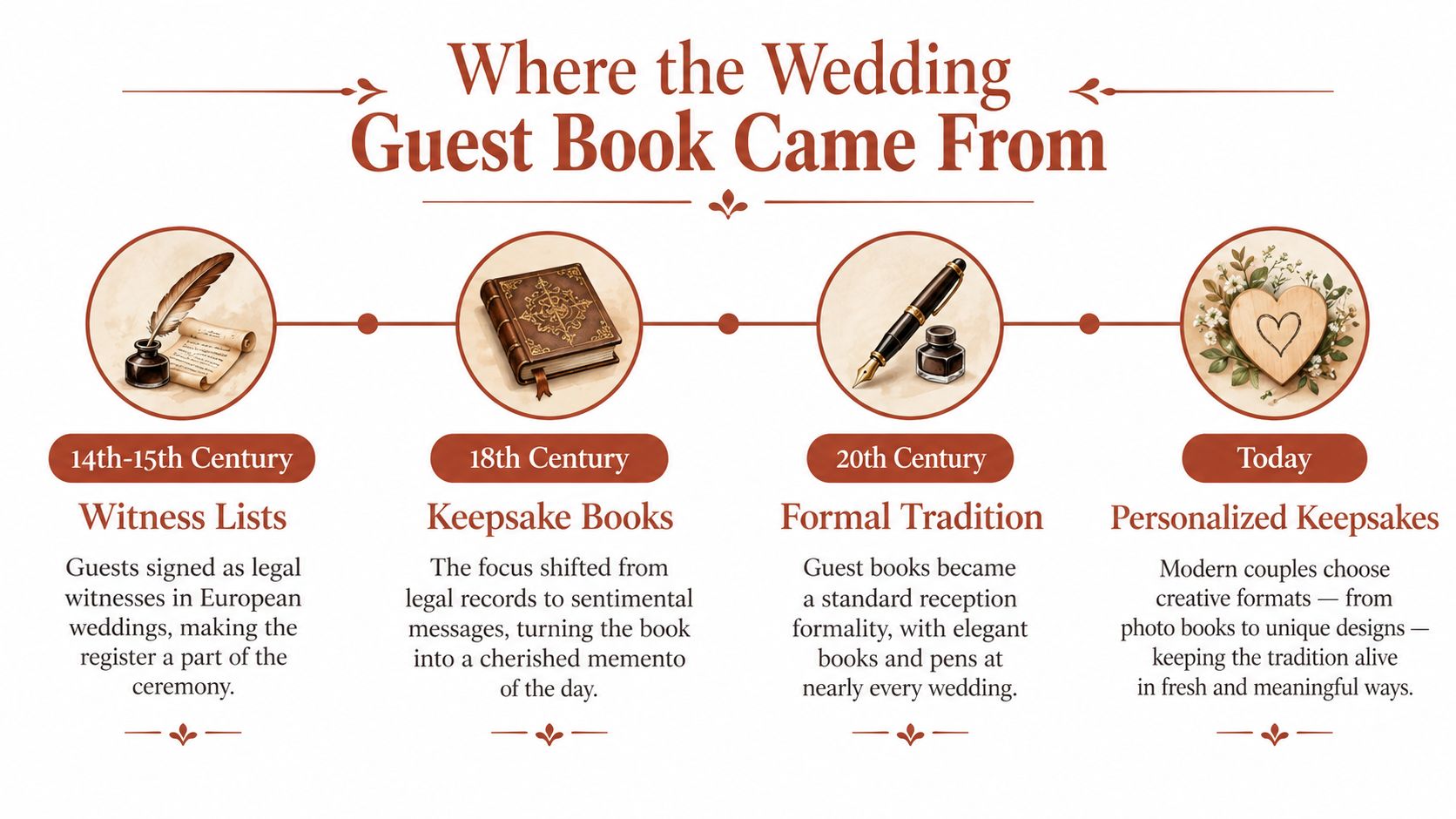
The tradition feels formal because it began with a formal purpose. In medieval Europe, guests at ceremonies could be asked to sign a marriage ledger or parish book as witnesses. Marriage certificates weren't yet standardized, so a written witness record helped document that the union had been seen and recognized.
Over time, the practical ledger gradually became more personal. By the Victorian era, couples were placing bound books at receptions so guests could sign their names and add short congratulations. This shift changed the guest book from evidence of an event into a souvenir of the people who made the event meaningful. The history of the wedding guest book describes this movement from formal witness record to reception keepsake.
A short historical arc
- Medieval ceremony records: Names established who had witnessed the marriage.
- Later household albums: Visitors used books and albums to leave inscriptions during social calls.
- Victorian reception books: Wedding guests signed a dedicated book and added good wishes.
- Modern alternatives: Couples use paper, cards, photographs, audio, and digital platforms.
The materials have changed, but the underlying intention has stayed remarkably stable. A couple wants to mark attendance, register goodwill, and preserve a record that can be revisited later.
That history explains why even creative formats still feel connected to the classic book. A signed vinyl record, voice message, or QR album changes the container, but not the emotional task. Each format asks guests to leave something that says, in effect, “I was here, and I'm happy for you.”
How a Guest Book Actually Works on the Day
A guest book works a little like a coffee shop tip jar with a notebook attached. People pass by, notice the invitation to participate, leave their name, and decide whether to add a sentence or something more personal. The couple provides the structure, while guests supply the meaning.
For a paper book, the usual flow is simple:
- Guests see a table near the entrance or another natural pause point.
- They find the open book, a pen, and a short instruction sign.
- They write their name and message, or answer a prompt.
- A member of the wedding party checks that the station remains easy to use.
A host or coordinator can gently direct people toward the table before they reach their seats. Prompt cards help guests who freeze at a blank page. Questions such as “What should we remember during our first year?” or “What song belongs on our wedding playlist?” give them an immediate starting point.
The digital version
A digital guest book follows the same pattern, but the paper is replaced by a private online page. A printed sign displays a QR code. Guests scan it with their phones, then type a note, upload a photograph, or record a voice message in the browser.
The best setup keeps the flow short. Guests shouldn't need to download an app or create an account while dressed for a celebration and balancing a drink. A clear instruction such as “Scan, leave a message, and add a photo if you'd like” removes uncertainty.
For ideas about wording and prompts, see what to write in a wedding guest book. Whether the contribution arrives in ink or through a phone, both formats solve the same job: they collect names and personal memories in one place.
Traditional and Digital Formats Compared
Paper and digital guest books shouldn't be judged on separate standards. Compare them by the same questions: how much preparation they need, what guests can leave, how private the entries are, and how you'll experience the result years later.
A leather-bound hardback feels ceremonial and becomes a physical object you can store on a shelf. A ring-bound book is more flexible because you can add or rearrange pages. Loose-leaf cards, Jenga blocks, and thumbprint trees feel more interactive, although they may need a box, frame, or display plan after the wedding.
Digital options include a private online album, a tablet kiosk, and a QR code connected to a shared album. They can collect richer media, including photographs, video, and voice notes, and they make remote participation possible. Their trade-off is that guests need to feel comfortable using a phone, and the couple needs a clear privacy and storage plan.
| Format | Typical Cost | Setup Time | What Guests Leave | Privacy | Keepsake Value | |---|---|---|---|---|---| | Hardback paper book | Varies by materials and customisation | Low | Names and handwritten notes | Physical and controlled by the couple | Tactile, ceremonial, easy to revisit | | Ring-bound or loose-leaf book | Varies by binding and pages | Low | Notes, drawings, photographs | Physical and controlled by the couple | Flexible and easy to expand | | Jenga blocks or thumbprint tree | Varies by materials and display | Low to moderate | Short notes or artwork | Physical and controlled by the couple | Decorative, but needs careful storage | | Private digital album | Varies by platform and storage | Moderate | Text, photos, video, and sometimes audio | Controlled through album settings | Searchable, exportable, and easy to share selectively | | Tablet or kiosk | Varies by device or rental | Moderate | Digital messages and media | Depends on the software settings | Immediate digital archive | | QR-linked shared album | Varies by platform and printed signage | Low to moderate | Text, photos, video, and voice notes | Can be private or invite-only | Broad, media-rich, and accessible later |
Paper can create blank-page anxiety, especially when guests don't know whether you want a signature or a story. Digital formats reduce that pressure when the page presents a prompt, but a QR sign that's too small, vague, or hidden can create a different kind of friction.
Many couples combine both. A paper book can sit at the ceremony or welcome table for handwriting, while a QR sign at the reception invites guests to add candid photographs and audio. You can explore the mechanics in this guide to a digital guest book.
Why QR and Audio Guest Books Are Trending in 2026
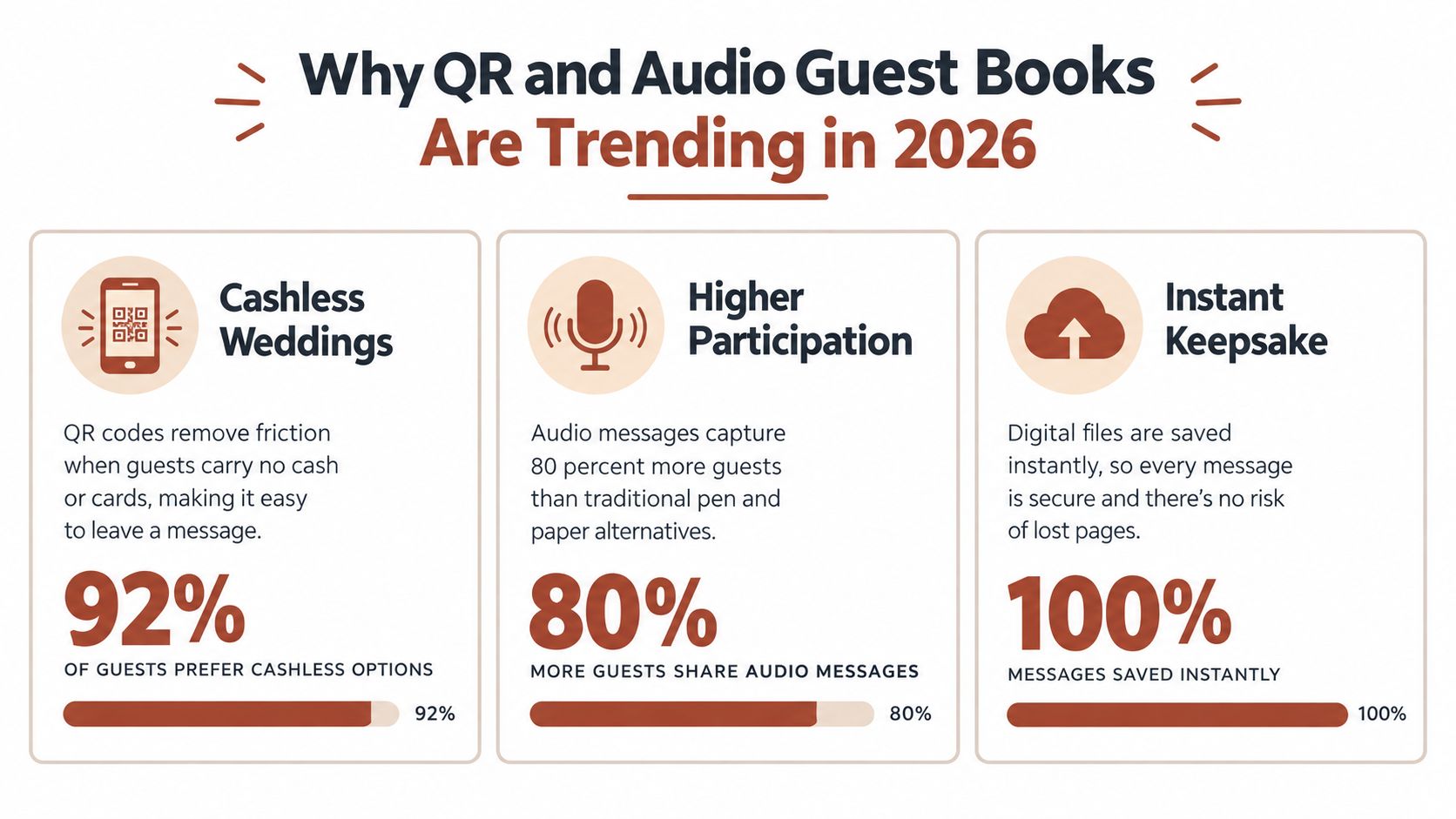
QR and audio formats address a practical problem: many guests have a phone with them, but they may not carry a suitable pen or want to spend time writing a long message. Wedding stationery already uses QR codes for schedules, maps, RSVPs, and photo sharing, so a scan-to-wish experience can feel familiar rather than novel.
A recent wedding guide identifies audio and digital guest books as leading trends for 2025 and 2026, and reports that QR-code use on wedding stationery has grown 42% since 2021, with nearly 49% of couples using QR codes for digital guest books or instant photo-sharing galleries. These figures come from Our Vows' guide to wedding guest book ideas.
The friction these formats remove
A browser-based album lets guests contribute without installing an app or creating an account. That matters for relatives who avoid unfamiliar apps, for friends taking photographs throughout the reception, and for people joining from another location.
Audio adds something handwriting can't preserve: tone, pauses, laughter, and the sound of a loved one speaking directly to you. A guest might record a quick congratulations, tell a story, or leave a message you can replay when you want to hear the voices behind the day.
Couples also gain a more complete archive. Instead of dividing memories between a paper book, several group chats, and individual phone galleries, they can collect names, messages, photographs, video, and audio within one organised space. Venues and planners can direct guests with a sign and keep the station available without managing loose pages or replacing a missing pen.
Before choosing a service, ask about accessibility, moderation, privacy, download rights, and how long the files remain available. A digital guest book should make participation easier without making control of your memories unclear.
For a closer look at recorded messages, see this guide to an audio guest book.
How to Choose and Use the Right Guest Book
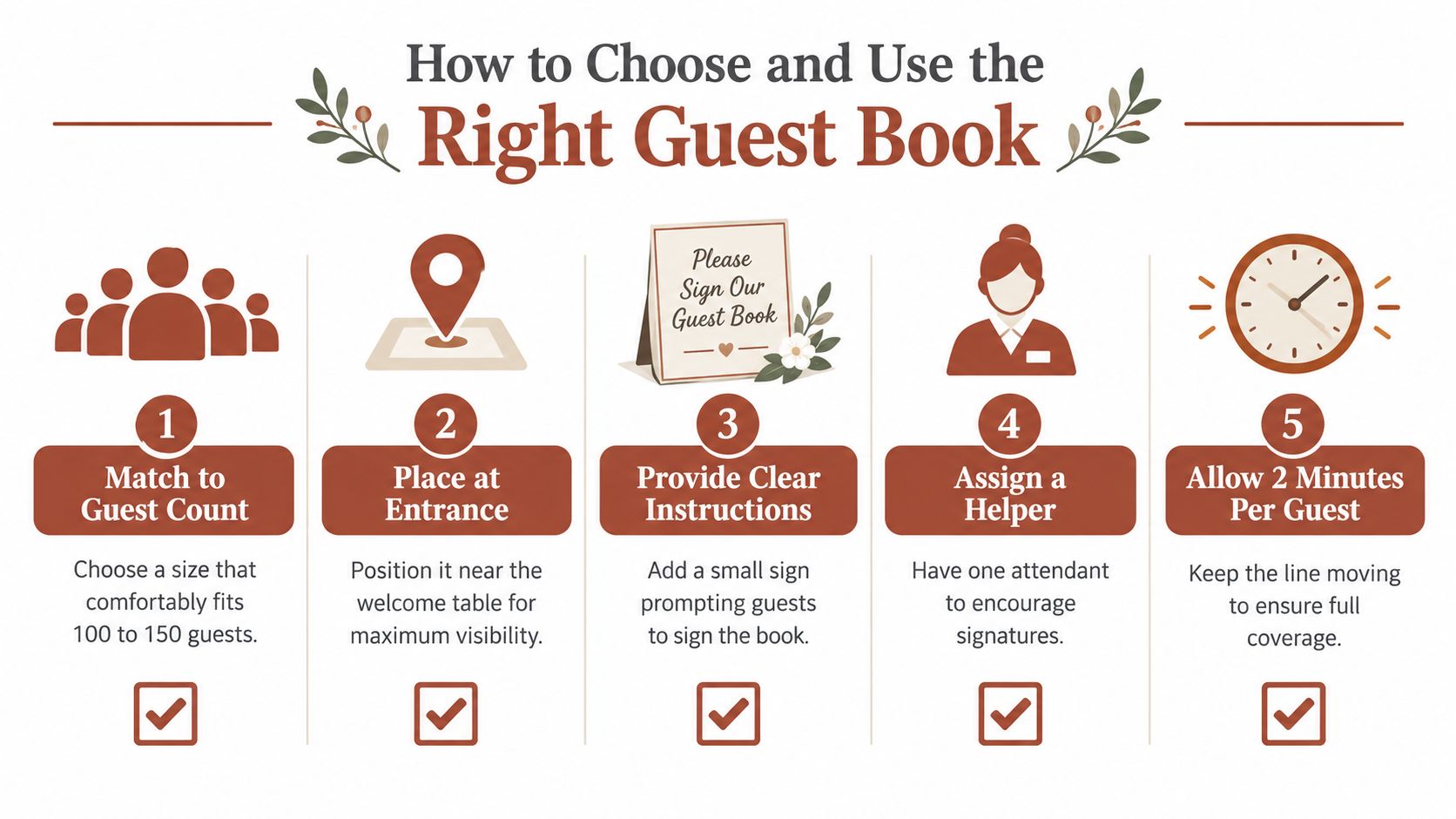
Start with your guests, not the cover design. An intimate dinner with close friends may suit prompt cards or an audio station, while a large reception may need a quick sign-and-go option. Your guest mix matters too. Some people will happily scan a QR code, while others will prefer a pen and a familiar page.
Recent guidance recommends 6 to 10 distinct prompts for prompt-card displays, helping guests choose a question without feeling overwhelmed, as explained in Paperlust's wedding guest book questions guide. You can mix warm, funny, and quick prompts so a guest can write a sentence or share a fuller memory.
Build the station around movement
Place the table where people naturally pause, such as between the entrance and the bar, rather than in a quiet corner. For paper, open the book to the first usable page and tether a pen so it doesn't wander. For digital participation, print the QR code clearly and position it at eye level with one short instruction.
A greeter, coordinator, or member of the wedding party can invite each table to participate. The nudge should feel welcoming, not like a task. You can also place an example message beside the book or card box, which shows guests the expected length and tone.
Use a short decision checklist
- Guest mix: Will older relatives, children, remote guests, or phone-first friends contribute?
- Venue flow: Can guests see and reach the station during arrival and departure?
- Memory type: Do you want handwriting, photographs, video, voice, or a mixture?
- Privacy: Who can view entries, and can you moderate uploads?
- Aftercare: Will you display the finished object, print digital entries, or export an archive?
If blank pages still worry you, use a prompt card collection rather than an entirely open book. This advice on a blank wedding guest book focuses on giving guests a clear starting point without forcing every message into the same shape.
Real Use Cases for Couples Planners and Venues
A couple choosing a hardback book may care most about handwriting. On each anniversary, they can open the album and recognise the uneven script of an elderly relative, the quick note from a childhood friend, or the joke that made sense only to people at the reception. The book becomes a physical object with marks that can't be perfectly reproduced.
A wedding planner coordinating several events may choose a QR-based private album instead. Guests can add messages, photographs, and short videos to one client-specific collection, while the planner keeps the instructions consistent from one event to the next. The couple receives a central archive rather than asking friends to search through separate messaging threads.
A boutique venue may place a tablet on the signing table and offer the digital archive as part of its guest experience. The venue team can explain the station during arrival, display approved contributions during the reception, and give the couple access to the finished collection after the event.
Each scenario uses a different container because each group has a different workflow. The shared thread is simple: the guest book captures the room, including the people, words, images, and voices that a single photographer can't preserve alone.
Key Takeaways and Wedding Guest Book FAQs
A wedding guest book gives you four decisions to make:
- Match the format to your guests, so participation feels natural.
- Match the setup to the venue flow, so the station isn't missed.
- Use prompts and clear instructions, so nobody faces an intimidating blank page.
- Choose your memory types early, especially if photos, video, or audio matter as much as signatures.
Frequently asked questions
How long should we leave the guest book available?
Keep it accessible during arrival, the reception, and departure if the venue allows. A second opportunity near the exit can catch guests who missed it earlier.
Can digital entries be printed later?
Often, yes. Export the messages and media, then choose whether to print selected notes, create a photo book, or keep the digital archive alongside a paper keepsake.
What if a guest refuses to sign?
Don't pressure them. A guest may prefer not to write, record, or share a photograph. The invitation should remain optional and comfortable.
Does a guest book replace a wedding photo album?
No. A photo album documents the visual story of the day, while a guest book records attendance and personal contributions. They complement each other.
The right choice isn't the most elaborate one. It's the format your guests can understand, use, and enjoy, while giving you a durable record of who showed up and what they wished for you.
If you want a QR-based alternative, The Wedding Pics lets guests add written messages, photographs, videos, and optional voice notes through a private browser-based album without an app or account. Review the privacy, moderation, and download options, then choose the setup that fits your wedding day.
- wedding guest book
- digital guest book
- guest book ideas
- wedding planning
- QR guest book