Wedding Seating Chart QR Code Setup Guide
Learn how to create a wedding seating chart QR code for your big day. Discover hosting options, design tips, privacy settings, and guest UX best practices.
From first scan to shared album
See wedding seating chart qr code setup guide from the guest’s side.
Learn how to create a wedding seating chart QR code for your big day. Discover hosting options, design tips, privacy settings, and guest UX best practices.
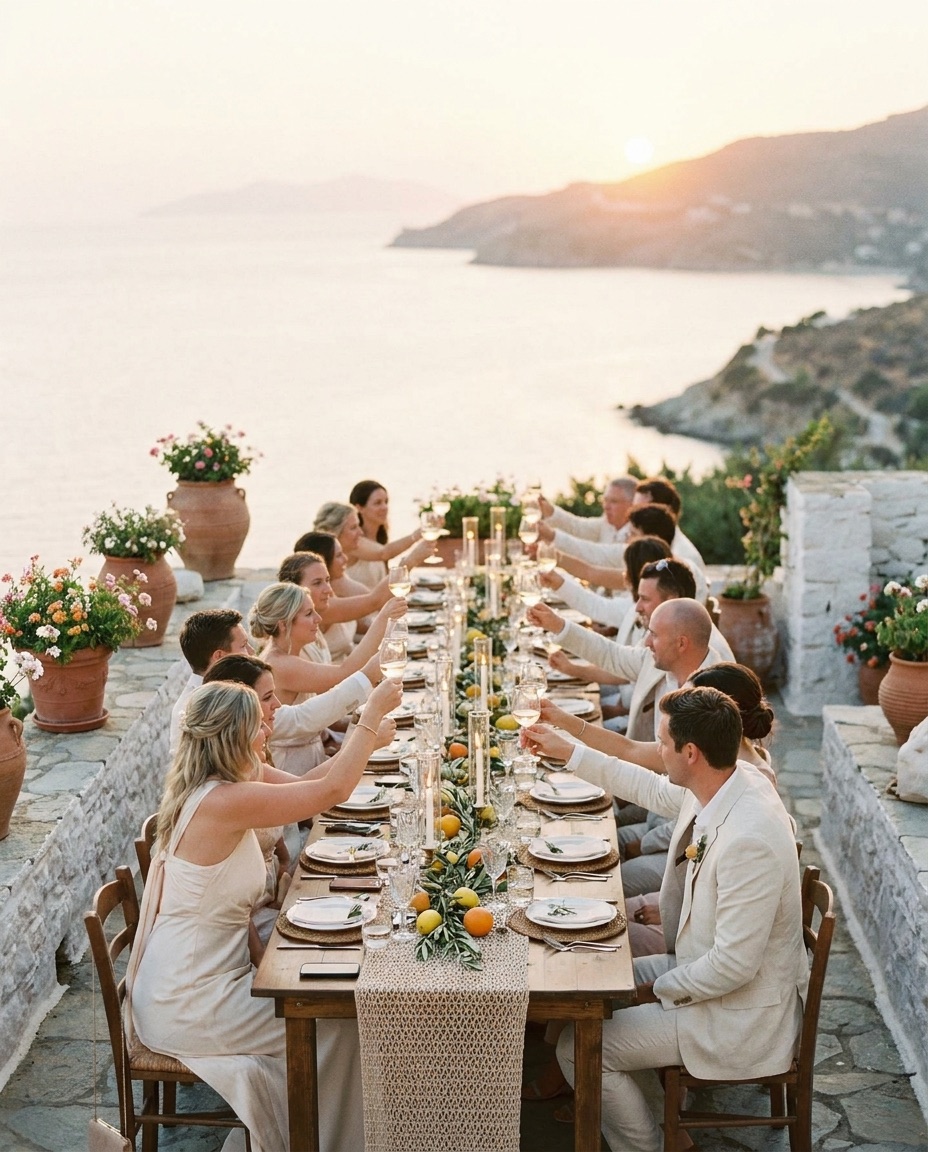

You've just spent hours arranging guests around tables, and now you're staring at the entrance wondering how everyone will find their place without creating a traffic jam. A traditional seating board looks beautiful in photos, but it can become crowded, hard to read, and impossible to correct once it's printed. A wedding seating chart QR code gives guests a faster way to search for their assignment while giving you more control on the day.
The technology is familiar to most mobile audiences. Industry summaries project that 102.6 million Americans will scan QR codes in 2026, while 84% of mobile users worldwide have scanned one at least once, according to QR code statistics from AirApps. That familiarity helps, but it doesn't guarantee a smooth experience. The code must lead to a fast, private, readable page, and the physical sign must work in the actual venue, not just in your stationery designer's mockup.
Table of Contents
- Why Ditch the Traditional Foam Board
- Choosing Your Digital Hosting Format
- Generating and Styling Your QR Code
- Protecting Guest Privacy and Data
- Designing Signage for Real Venue Conditions
- Day-Of Testing and Photo Album Integration
Why Ditch the Traditional Foam Board
A foam board creates one obvious point of failure. Every guest arrives through the same entrance, walks toward the same display, and tries to locate a name among a dense grid of small type. People stop with their drinks, relatives gather behind them, and the next wave of arrivals has nowhere to go.
A QR-based chart distributes that task. Guests scan the code, search their name, and move away from the entrance instead of standing shoulder to shoulder around one poster. The result isn't merely more modern. It's a better traffic pattern.
Planner's rule: The entrance should help guests move into the celebration, not force them to form a queue before dinner has even started.
Printed charts also freeze your seating plan at the moment you send the file to the printer. A late RSVP, family request, or table swap can make the display inaccurate. With a hosted digital page, you can change the assignment at the destination without replacing the sign. The printed QR code remains useful because it points to the updated page.
That flexibility matters most when the reception plan is still shifting. You can ask your coordinator to update the guest record from a phone, then have the next guest see the corrected result. You won't need to explain why the board says one thing while the place cards say another.
The practical advantages
- Less visual congestion: One sign can direct guests to a searchable page rather than displaying every name in tiny text.
- Cleaner updates: Changes happen on the hosted page, so you don't have to reprint a large-format chart.
- Better accessibility: Guests can enlarge their phone screen instead of squinting at a distant list.
- Lower material dependence: You can use a modest welcome sign and avoid building the entire entrance around a single oversized board.
- More flexible styling: The sign can match your stationery while the searchable layout handles the information load.
A QR seating chart doesn't eliminate the need for human help. Keep a coordinator or attendant nearby, along with a printed backup for guests who don't have a smartphone or don't want to scan. Digital should reduce pressure, not leave anyone stranded.
If you're weighing QR-based guest interactions against other disposable wedding technology, this comparison of disposable cameras and wedding QR codes can help you decide which approach fits your celebration.
Choosing Your Digital Hosting Format
The QR code is only the doorway. The destination determines whether guests enjoy the experience or abandon it after a slow, awkward page load.
You have three sensible hosting choices: a basic document, a page on your wedding website, or a dedicated event platform. Each can work, but they aren't equally suitable for a busy reception entrance.
Compare the main options
| Hosting Method | Mobile Experience | Last-Minute Updates | Estimated Cost | |---|---|---|---| | Google Sheet or Doc | Functional, but often requires zooming, scrolling, or navigating a shared file | Easy if editing permissions are set correctly | Free or low cost | | Wedding website page | Good when the builder uses responsive layouts and a simple search flow | Usually easy through the website editor | Often included with the website plan | | Specialized event app or platform | Usually designed for mobile guests and focused event tasks | Typically built for live event changes | Varies by provider and plan |
A Google Sheet is acceptable for a small, informal event when the link is protected and the list is easy to search. It's not my first choice for a large reception. Guests may see more information than intended, encounter a permission request, or struggle with a spreadsheet interface on a phone.
A PDF has an even bigger weakness. It can preserve your design, but it usually turns the seating search into a hunt through a long page. If the guest has to pinch, zoom, and scroll past decorative elements, you've replaced one frustrating board with a digital version of the same problem.
My recommendation
Use a dedicated page on your wedding website if you already have a responsive builder and can create a direct, uncluttered route. The page should open in the native browser, avoid account creation, and present one clear action, searching for a guest name.
Choose a specialized event platform when you need permission controls, structured guest records, rapid edits, or support on the wedding day. Check whether it can show only the relevant assignment rather than exposing the full list. If you're also planning a digital guest album, review wedding photo-sharing website options before choosing separate tools that may confuse guests.
Whatever you choose, test the exact guest-facing link, not an administrator preview. A page that works while you're logged in may fail for someone arriving from a phone camera.
Generating and Styling Your QR Code
Start with the destination URL, not the artwork. Open the page in a private browser window, confirm that a guest can reach it without signing in, and make sure the content displays correctly on a phone. Only then should you generate the code.
Use a QR generator that supports error correction and, preferably, a dynamic destination. Error correction gives the code more tolerance if the print picks up a mark or the sign suffers minor wear. A dynamic code lets you change the destination later without replacing every printed sign, which is useful if your website page breaks or your seating tool changes before the reception.
Build the code without damaging readability
-
Keep strong contrast. Dark modules on a light background remain the safest choice. Avoid pale blush on cream, metallic ink, busy watercolor backgrounds, and other combinations that look elegant but confuse phone cameras.
-
Protect the quiet zone. Leave clear space around every edge of the code. Frames, flourishes, and text should sit outside that breathing room, never across the modules.
-
Treat logos as optional. A small centered logo can work, but it reduces usable scanning information. Keep it modest, use strong contrast, and test the finished version rather than assuming the unbranded code will behave the same way.
-
Choose restraint over novelty. Rounded dots and colored modules can suit a wedding aesthetic, but unusual shapes and low contrast create unnecessary risk. Your guests need a working doorway, not a design experiment.
-
Print a real sample. Test the exact size, paper, finish, and placement you'll use at the venue. A code that scans on a bright monitor may struggle on glossy cardstock under dim lighting.
Use the wedding QR code generator from The Wedding Pics if you want to create a code for a hosted wedding experience, then test the resulting asset before sending your stationery to print.

The practical benchmark is mobile delivery. One industry report states that 89% of QR scans happen on mobile devices, so the page needs to open in a native browser, avoid unnecessary login steps, and keep the primary action obvious, as outlined in QR code performance guidance from QRTrac. Don't print the final design until several people have scanned it from different distances and in different lighting.
Protecting Guest Privacy and Data
A seating chart contains more than table logistics. It can reveal who attended, which guests are connected, and where specific people are sitting. Publishing the full list on an open page turns a convenient tool into an unnecessary privacy exposure.
An unlisted URL is not the same as a secure page. Someone can forward it, photograph the sign, or share a screenshot. Search engines may not index an unlisted page, but anyone who receives the address can still open it. That doesn't mean QR seating is unsafe. It means you should decide what the page reveals before you print the code.
Choose the smallest useful disclosure
A guest generally needs their own table assignment. They may not need a complete guest list, a searchable directory of every attendee, or detailed notes about family relationships.
Consider these access models:
- Guest-name search: The guest enters a name and sees the relevant assignment. This reduces casual browsing, but common names and spelling differences need careful handling.
- Last-name search: This adds a small barrier and can work well when the platform handles duplicate surnames clearly.
- Event PIN: A shared PIN prevents casual access from someone who scans the sign outside the event. It does add one extra step, so print it clearly or provide it on the sign.
- Invite-only access: Strongest for sensitive events, but more demanding to administer when guests arrive at different times.
- Unlisted page: Convenient for low-risk celebrations, but it should not be treated as private by itself.
Higher-profile guests, complicated family dynamics, and vendors with different access needs justify stricter controls. A vendor may need the venue schedule but not the guest seating list. A VIP guest may prefer not to have their location searchable by anyone holding the sign.
Privacy also applies to your broader wedding content. The guidance in this wedding photo privacy guide is useful when you're deciding who can view guest uploads, seating information, and event pages.
Privacy rule: Show each guest what they need to navigate the reception, not everything your database happens to contain.
Ask your coordinator to test the page as an ordinary guest. Confirm what appears before and after a search, whether a wrong name reveals useful information, and whether the link remains accessible after the event. Delete or restrict the page when the wedding is over if you no longer need public access.
Designing Signage for Real Venue Conditions
A QR code that scans perfectly on your kitchen counter can fail at the reception entrance. Guests may be holding a clutch or drink, the room may be dim, overhead lighting may reflect off the sign, and several people may try to scan while others are walking past.
Start with the sign's job. It should tell guests what to do immediately, not make them decode a decorative composition.

Use direct copy such as “Scan to Find Your Table” or “Scan, Search Your Name, Find Your Seat.” Place the instruction above the code, with enough separation that the code remains visually distinct. Don't bury it in a paragraph about the ceremony, bar menu, or guestbook.
Build for movement and low light
- Use a matte surface: Glossy acrylic and laminated paper can reflect phone flash or overhead fixtures. A matte finish usually gives cameras a cleaner view.
- Add gentle illumination: Place the sign where ambient light reaches it. Avoid positioning it directly beneath a bright spotlight that creates glare.
- Keep the code flat: Angled easels can introduce reflections and make it harder for guests to hold their phones steady.
- Separate the traffic: Use multiple signs at natural approach points rather than forcing every guest toward one display.
- Leave physical space: Don't put the sign behind a floral arrangement, guestbook table, coat rack, or narrow doorway.
- Provide assistance: A coordinator can help older guests, correct name searches, and direct people toward the reception without creating embarrassment.
The QR code seating chart guide from DigiSeats also identifies common display formats such as acrylic signs, framed prints, wooden signs, and venue screens. Choose the material according to the space, not just the invitation suite. A rustic wooden sign may suit an outdoor setting, while a screen may be easiest to adjust, but both still need readable contrast and a clear scanning angle.
Place one sign near the first arrival route, then another where guests naturally pause before entering the dining area. Keep the welcome message and seating instruction separate if combining them would make either one too small.
For a practical visual demonstration of placement and setup, watch the video below before finalizing your entrance layout.
A printed backup should sit with your coordinator, not necessarily beside the QR sign. That keeps the main display clean while ensuring a technical problem never becomes a guest-facing crisis.
Day-Of Testing and Photo Album Integration
Test the complete journey before guests arrive. Scan the printed code with an iPhone and an Android phone, open the page without an administrator login, search several names, and confirm that the result is understandable at a glance.
Test the venue's actual connection conditions. Use the venue Wi-Fi if guests will rely on it, then test cellular data in the entrance area as well. A page that loads quickly at home may behave differently behind a crowded venue network or inside a room with weak reception.
Give one person ownership
Assign the coordinator or a trusted attendant to handle the digital chart. That person should have:
- The current destination link: Keep it saved in a phone note and accessible without searching through messages.
- A printed backup: Include the final assignments and a simple method for finding names.
- A change protocol: Decide who can approve a last-minute move and who updates the page.
- A guest-support role: Help with scanning without making guests feel uncomfortable about their technology.
- A privacy check: Confirm that only the intended page and assignment appear after a search.
Don't make the couple troubleshoot during cocktail hour. Give the coordinator the authority and information to solve ordinary problems while you stay with your guests.
Pair seating with guest photo uploads
A second QR destination can collect candid photos and videos in a private album, but don't place two unexplained codes beside each other. Guests need to know which one finds a table and which one uploads memories.
Use a single welcome sign with two clearly labeled actions if the design has enough space. Otherwise, give seating the entrance position and place the photo-upload code on table cards, near the bar, or beside the guestbook. The distinction should be obvious from the wording alone.
The Wedding Pics provides browser-based guest uploads, private album access, optional guest PIN controls, moderation tools, original-quality file preservation, and printable QR assets. It can fit the photo-collection side of the plan while your seating page handles table assignments. Keep the two experiences visually related, but don't make guests guess which scan they need.
Before the ceremony, scan both codes from their final printed materials. After the reception, review access settings and download the album while the event files remain available under your chosen plan.
Use this setup as a final pre-print checklist: choose a fast destination, limit exposed guest information, test the code in realistic lighting, and assign a coordinator to manage changes. For the photo side of your wedding, visit The Wedding Pics to create a private browser-based album with QR uploads, moderation, and downloadable guest memories.
- wedding seating chart qr code
- wedding qr code
- digital seating chart
- wedding planning tech
- guest experience