Wedding Photo Upload Website Explained Simply
Learn how a wedding photo upload website works, what features matter, and how to choose one. Compare options and see The Wedding Pics in action.
From first scan to shared album
See wedding photo upload website explained simply from the guest’s side.
Learn how a wedding photo upload website works, what features matter, and how to choose one. Compare options and see The Wedding Pics in action.

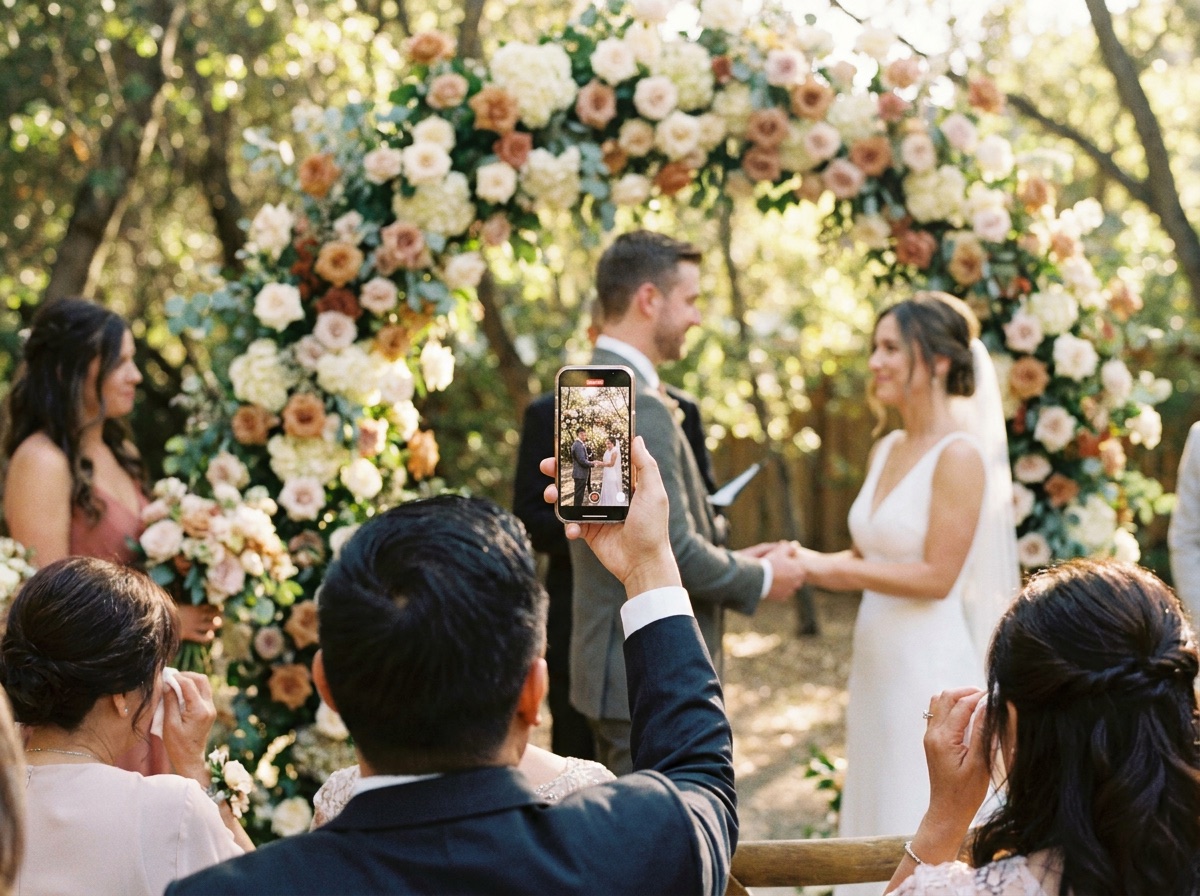

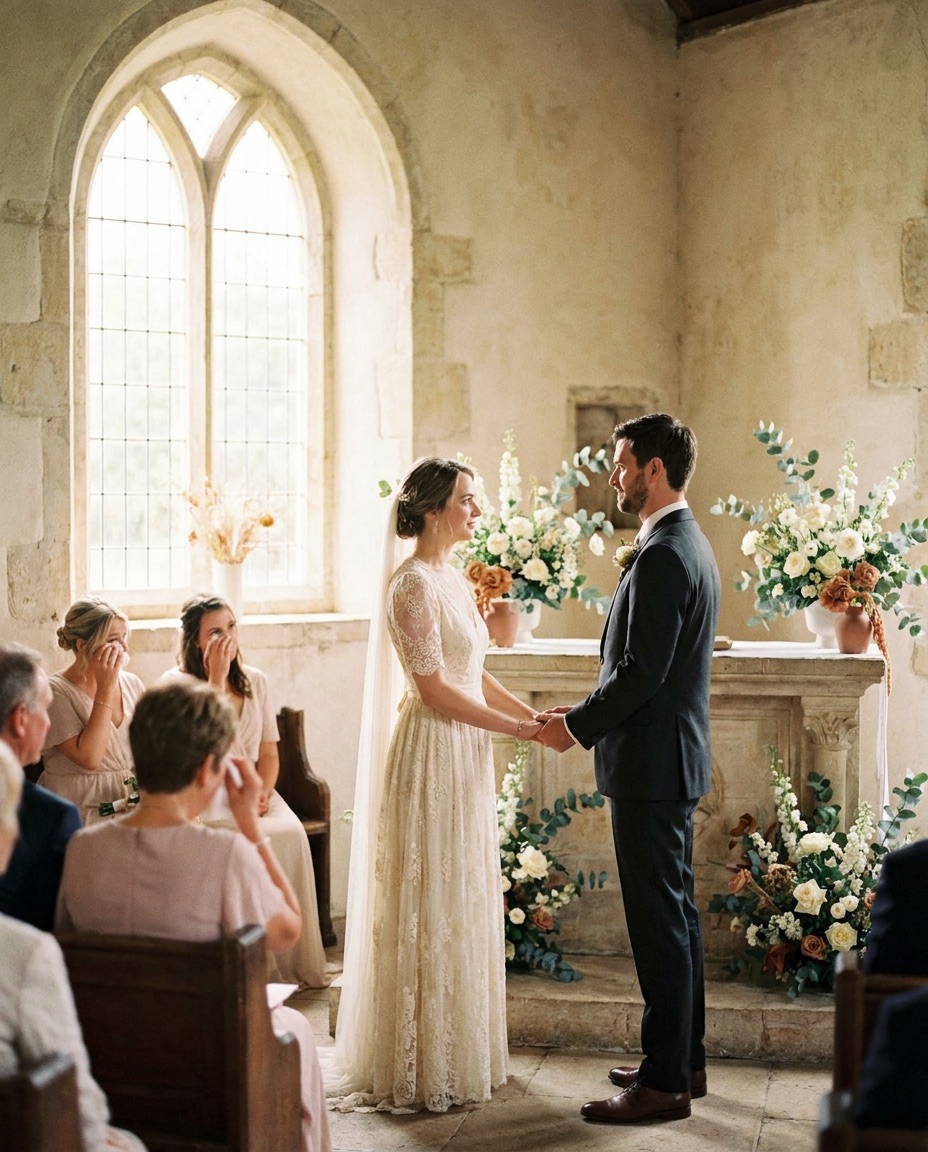






You've probably seen this happen already. The wedding is over, everyone has gone home, and your phone is full of professional portraits while the best candid moments are scattered across WhatsApp threads, iMessage attachments, AirDrops, Instagram messages, and screenshots. One guest has a brilliant dance-floor video, another captured your grandmother's reaction during the ceremony, and someone else has the only clear photo of the entire wedding party. Finding those files later becomes a slow hunt through conversations that keep moving.
A wedding photo upload website gives those memories one shared destination. Guests scan a QR code or open a link, upload from the browser on their phone, and send their photos into a central album instead of leaving them buried in private chats. The important decision isn't only where the files will be stored. It's whether guests will participate easily and whether you and your guests understand who can view, download, approve, or share what gets uploaded.

Table of Contents
- Introduction Why Guest Photos Get Lost After the Party
- What a Wedding Photo Upload Website Actually Does
- Key Features That Make Uploading Effortless and Safe
- How It Compares to Group Chats Apps and Shared Drives
- How Couples Planners and Venues Use It on the Day
- Privacy Security and Pricing Trade Offs Explained
- Your Practical Checklist for Choosing and Using a Service
Introduction Why Guest Photos Get Lost After the Party
Guest photos disappear from view for ordinary reasons. People take pictures on different phones, post them in different places, and forget to send the originals once the excitement fades. A message asking, “Could you send me that photo from the reception?” may produce a compressed screenshot, a social-media download, or no reply at all.
The problem became easier to understand as online photo sharing evolved. Dedicated services moved photo distribution away from print-centric workflows and toward centralized digital albums, with Webshots launching its community in 1999 and Flickr becoming a major milestone in 2004. The history of online photo sharing also describes how Facebook helped normalize rapid online sharing after reaching 300 million users in 2009 and receiving more than 100 million photo uploads per day by 2010.
A wedding album built for guest uploads applies that same basic idea to one event. Instead of asking every guest to remember a hashtag or send files individually, you create one private place before the celebration begins. The QR code becomes a small signpost, like a guestbook placed on every table.
The practical shift: You're not asking guests to become organized archivists. You're giving them one easy door into the collection.
This guide is for couples, planners, and venues deciding whether a dedicated upload site is more useful than a group chat, social album, app, or shared drive. You'll learn how browser uploads work, which controls protect guest trust, how to plan the day-of workflow, and which questions deserve answers before you pay for a service.
What a Wedding Photo Upload Website Actually Does
Think of a wedding photo upload website as a private digital guestbook table in the cloud. The table stays open throughout the celebration, but instead of handwritten messages and disposable cameras, guests contribute photos, videos, written notes, and sometimes voice messages.
The process usually has four parts:
- You create one event album. You add the wedding details, choose the gallery settings, and decide whether the album covers only the wedding day or also includes the rehearsal dinner, welcome party, after-party, or farewell brunch.
- You share one QR code or private link. Guests scan the code with their phone camera. The link opens an upload page in the mobile browser, so they don't need to install an app or create an account.
- Guests select files from their phones. They can upload moments as they happen, from getting ready through the last song.
- You manage the collection. Depending on the service, uploads may go straight into a guest-visible gallery, remain private until approval, or stay visible only to the couple.
That central album solves a basic organizational problem. A group chat is designed for conversation, not archiving. A social platform is designed for public discovery, not necessarily private ownership. A generic drive can collect files, but it often lacks the welcoming event page, live gallery, moderation tools, and guestbook experience that make people want to contribute.
A browser flow also removes a major barrier. Independent wedding-sharing guidance recommends using one private album and one QR code so guests can upload from any phone browser. That approach works across mixed iPhone and Android guest lists and avoids asking someone to download an unfamiliar app for a single occasion.

A useful example is The Wedding Pics how-it-works guide, which presents the experience around a central private album, browser-based guest access, and couple-controlled collection. The details differ between providers, but the mental model stays simple. Guests contribute through a shared doorway, and the couple decides how the room is managed.
The quality setting matters, too. Some services keep the original uploaded files while creating smaller display copies for fast browsing. That distinction protects photos you may want to print, edit, or preserve years later.
Key Features That Make Uploading Effortless and Safe
A long feature list can make wedding technology sound more complicated than it is. Start with the guest's moment of decision: they see a QR card, scan it, and ask, “Can I upload this without creating an account?” Every feature should either make that action easier, protect the files, or help you enjoy the collection afterward.

Start with no-friction access
QR access in a mobile browser should be the foundation. Guests already know how to scan a code and select photos from their camera roll. Removing app installation, account creation, and sign-in keeps the path short for older relatives, international guests, and anyone who doesn't want another event app on their phone.
Mobile behavior supports that design. Industry summaries report that 68% of smartphone photos are shared on social media within 24 hours, while another source reports 69% of event guests share event photos on social media within 24 hours. The same reporting estimates that people take about 1,440 photos per year on average. These photo-sharing statistics point to a clear design requirement: guests need to upload while the memory is fresh, not after they return home and forget.
Give the couple control over visibility
A private album isn't a single setting. Look for options such as an unlisted link, guest PIN, invite-only viewing, couple-only downloads, and approval before an image appears in a live slideshow.
Those choices answer different needs:
- Private by default: Useful when guests can upload freely but only the couple should review the collection.
- Guest-visible: Helpful when you want the album to feel like a shared digital guestbook during the event.
- Approval-gated: Appropriate for a reception slideshow or a formal gallery where every displayed image needs review.
Privacy rule: Tell guests what happens after upload. A short consent note is clearer than assuming everyone understands the gallery's visibility settings.
Preserve files and protect the archive
Original-quality storage is more important than a glossy gallery preview. Browser compression can decode a JPEG into pixels and re-encode it at a new quality level. In a batch test of 20 phone photos averaging 3.8 MB each, files fell to about 1.9 MB at quality 0.92, 720 KB at 0.80, and 410 KB at 0.60. The technical explanation of browser image compression shows that recompression can reduce storage by 50% to 89%, but may also introduce softness and artifacts.
Choose a service that keeps originals and creates display copies separately. A ZIP export is valuable because it gives you a straightforward archive instead of requiring you to download files one at a time.
Organize the story
Sub-albums keep a multi-day celebration readable. You might separate “Welcome Party,” “Ceremony,” “Reception,” and “After-Party,” rather than placing every upload into one endless stream. A written guestbook and optional voice notes add context that a camera roll can't provide.
You can review the feature categories on The Wedding Pics features page, then compare them with your actual event needs. A small one-day wedding may need only QR uploads, private visibility, and an export. A destination celebration may benefit from sub-albums, video support, moderation, and a longer collection window.
How It Compares to Group Chats Apps and Shared Drives
The familiar option isn't always the practical option. Group chats feel easy because everyone is already there, but they mix conversations and files, bury older uploads, and encourage guests to send whatever version of a photo the app accepts. A dedicated upload site makes the collection feel like an event activity rather than another message thread.
| Method | Guest Friction | Image Quality | Organization and Control | |---|---|---|---| | Group chat | Low for existing members, but guests must join the right thread | May be compressed or separated from the original | Conversation-first, with limited event moderation | | Social hashtag | Familiar to active users, but requires an account and correct hashtag | Platform processing may alter files | Public by default and difficult to govern as a private archive | | App-based wedding platform | Requires installation, and sometimes an account or sign-in | Depends on the service and download settings | Can offer event tools, but every guest must complete setup | | Shared drive or file request | Usually simple, but feels like sending files rather than sharing memories | Can preserve originals when configured correctly | Strong folder control, but often lacks gallery, slideshow, or guestbook features | | Browser QR album | Scan, choose photos, upload | Can preserve originals when the service separates originals from display copies | Central gallery with privacy, moderation, and event organization |
The participation question is especially important. A 2026 survey summary reports that app-based solutions convert 20% to 30% of guests, while no-download QR systems reach 60% to 80% participation. The same source reports browser links converting 85% of scans into uploads, compared with 23% for app-install methods. The event guest survey summary suggests that every extra step matters.
That doesn't make group chats useless. They're good for quick reactions, urgent updates, and sharing a single favorite image with close friends. Instagram can work when public sharing is the point. Google Photos or Dropbox may suit a couple that wants basic file collection and already understands the limitations.
The dedicated upload site becomes the stronger primary method when you want broad participation, original files, one organized archive, and clear visibility rules. This comparison of Google Photos and The Wedding Pics can help if a shared Google album is already on your shortlist.
How Couples Planners and Venues Use It on the Day
The smoothest setup gives each person a clear job. The couple makes the decisions, the planner prepares the physical prompts, and the venue or AV team handles the display. Guests only need to scan, select, and send.
Before the celebration
Create the album early enough to test it with someone who isn't involved in the setup. Ask them to use a phone browser, upload a photo, and explain what they think will happen next. This catches unclear instructions before the wedding does.
Set the visibility rules at the same time. Decide whether guests can view one another's photos, whether uploads need approval, and whether downloads are limited to the couple. For a destination or multi-day wedding, create sub-albums for each gathering so the final collection follows the shape of the celebration.
Prepare QR cards for tables, programs, welcome signs, and the guestbook area. The card should explain the action in everyday language, such as “Scan to add photos to our wedding story.” It should also include a regular short link for guests whose camera has trouble reading the code.

During the event
Place the code where guests naturally pause. Tables, the bar, the guestbook station, and the welcome area can all work, provided the code has enough light and isn't hidden behind decoration. A planner can mention it during the welcome, while a trusted friend can help relatives who aren't comfortable with QR codes.
The collection can begin before the ceremony. Guests may upload getting-ready photos, travel moments, and rehearsal memories, then continue through the ceremony, meal, speeches, and dance floor. This makes one album useful for the full story rather than only the formal portraits.
A venue with a screen can display approved uploads as a live slideshow. Keep moderation active if the slideshow is guest-facing. The AV team should know which gallery is approved for display and who has authority to remove an image.
After the event
Export the original files while the service's storage period is active. Keep the ZIP in at least one long-term location you control, then make a second backup before editing, printing, or sharing publicly. The planner can deliver the archive to the couple, while the venue can remove display access after the reception if the contract requires it.
Privacy Security and Pricing Trade Offs Explained
A QR code makes access convenient, but convenience doesn't answer the privacy questions. Before printing anything, decide what guests are agreeing to when they upload and what the couple plans to do with the files later.
Write a short note near the code. It can explain that uploads go into the wedding album, identify who can view them, and say whether selected images may appear in a slideshow. Avoid collecting full names, phone numbers, or email addresses unless you have a real reason. Minimal data collection makes the experience easier and reduces information you need to manage.
Choose the gallery audience
Use these questions to make the setting concrete:
- Who can view uploads? Only the couple, invited guests, or anyone with an unlisted link?
- Who can download files? The couple alone, selected hosts, or every guest?
- Do uploads appear immediately? If yes, make sure guests understand that. If not, explain that the couple reviews them first.
- Can the couple change visibility later? This matters if a private gallery may eventually become a public social collection.
- How long will access last? Check both the guest upload window and the period when the couple can view or export the album.
A private, guest-visible, or approval-gated gallery can each be appropriate. The right choice depends on the people attending, the type of event, and whether a live display is involved. The important part is that the choice is deliberate rather than hidden in a default setting.
Match the plan to the event
Pricing usually reflects storage capacity, upload duration, retention, video support, gallery controls, and display options. A one-day wedding with a short collection period has different needs from a destination celebration where guests upload across several gatherings.
Look for a one-time payment if you don't want a recurring renewal, and confirm what happens when the storage period ends. A plan can appear inexpensive until you discover that original downloads, extended hosting, extra albums, or slideshow access cost more.
The Wedding Pics pricing page presents plans with tiered storage, upload windows, storage periods, and display options. Compare those limits against your guest list, expected video use, number of event days, and archive routine. The cheapest plan isn't automatically the best value if it leaves you rushing to export files or unable to separate a multi-day celebration.
Your Practical Checklist for Choosing and Using a Service
Use this checklist before you commit:
- Test the guest path: Scan the QR code on different phones and upload without an app or sign-in.
- Check participation barriers: Make sure guests can contribute in a few clear steps, especially older relatives and international visitors.
- Confirm file handling: Verify that original-quality uploads are retained and that a ZIP export is available.
- Set visibility deliberately: Choose private, guest-visible, or approval-gated access, then write a short consent note.
- Plan moderation: Decide who reviews images before a live slideshow or guest-facing gallery displays them.
- Review event structure: Choose sub-albums if you're collecting rehearsal, ceremony, reception, and after-party photos.
- Read the plan limits: Check storage, upload duration, retention, video support, and whether payment is one-time or recurring.
- Prepare physical prompts: Print readable QR cards, add a short instruction, and place them where guests naturally pause.
- Archive promptly: Export the originals after the event and store a second backup outside the service.
A wedding photo upload website works best when the technology disappears into the day. Guests should remember sharing a funny moment with you, not struggling through an account setup. Choose the service that removes friction while giving you clear control over the memories entrusted to it.
The Wedding Pics provides a private album with browser-based QR uploads, original-quality file preservation, moderation, optional sub-albums, live slideshow support, guestbook tools, and ZIP export options. Visit The Wedding Pics to see whether its one-time payment plans and privacy controls fit your wedding workflow.
- wedding photo upload website
- wedding photo sharing
- QR code wedding album
- wedding guest photos
- wedding slideshow