
Why a generic checklist stops being useful immediately
Every wedding checklist on the internet assumes you have twelve months, a hundred and fifty guests and a hotel ballroom. If you have four months, forty guests and your parents' garden, roughly half of it is irrelevant and the timings are actively misleading.
This planner scales instead. Tell it how many months you actually have and every phase moves: at eighteen months the first phase sits at eighteen months out, at three months it compresses and the priority list changes to reflect what is genuinely urgent.
The budget does the same. Style and setting shift the allocation — a backyard wedding moves money out of venue hire and into infrastructure, a destination wedding moves it into travel, a glam wedding moves it into attire and flowers — and every breakdown reconciles to exactly the figure you typed, not to ninety-eight per cent of it.
- A budget that adds up to exactly your number
- A timeline scaled to the months you actually have
- Priorities that change with your guest count and setting
- Style and setting adjustments that move real money
- A plain-text download you can paste into any list app
Book the three things that only exist once
There is a hierarchy in wedding planning and almost every problem comes from ignoring it. Three suppliers are effectively unique on your date: the venue, the photographer and the caterer. Everything else has substitutes.
Book those three first, in that order, and build every remaining date around them. Bands, florists, cake makers and transport are all bookable much later than people think, and paying a rush fee on a florist is a far smaller problem than losing your venue.
The one thing that comes before all of it is the legal paperwork. In England and Wales you must give notice at a register office and wait a statutory period; in the US, licence rules and waiting periods vary by state and county. It is the only date in your entire plan that cannot be negotiated, so confirm it before you confirm anything else.
How the budget is actually allocated
Venue and catering take around forty per cent of a typical wedding budget, and together with photography and attire they account for roughly two thirds of everything you will spend. That concentration is the most useful fact in wedding budgeting, because it tells you where decisions matter.
Cutting the guest list is by far the most powerful lever you have, because it moves the largest category. Twenty fewer guests at a typical per-head rate saves more than every other economy you could make combined, and it does it without anyone noticing a downgrade.
The reverse is also true and catches people out: a smaller wedding does not cost proportionally less. Photography, officiant, flowers, transport and stationery barely shrink with the guest list, so per-guest cost rises sharply at the small end. A forty-person wedding is cheaper in total and more expensive per head than a hundred-person one.
Hold back a contingency and do not touch it
Every wedding budget needs five to ten per cent held back, unallocated, until the final month. Not assigned to a category, not quietly spent on better flowers in month four. Held back.
It gets used, every time. Suppliers add charges nobody mentioned, guest numbers move in the wrong direction, someone needs accommodation, the weather changes your outdoor plan, or a supplier drops out and the replacement costs more at short notice.
Couples who hold a contingency describe the final month as busy. Couples who allocated everything describe it as stressful. It is the same wedding; the difference is a line item.
- Five to ten per cent, unallocated
- Confirm every supplier's arrival time in writing, not by phone
- Set the RSVP deadline three to four weeks out, not one
- Check whether quotes include tax and service
- Name one person, who is not you, to handle questions on the day
When an instant plan is enough, and when it is not
For a single-day wedding, in one or two locations, with a guest list under about a hundred and fifty, a structured plan and a shared list genuinely is enough. Most weddings are this, and most of them are run by the couple.
A planner or at least a day-of coordinator starts to earn their fee when the day has moving parts: a multi-day or destination wedding, several venues, a marquee build, complex production, or a guest list well over a hundred and fifty. It also earns its fee when neither of you has the time, which is a completely legitimate reason.
The minimum version, whatever your budget, is one named person who is not either of you running the day itself. On the day you will be photographed, hugged, fed and moved around constantly. You cannot also be the person the florist calls.
Plan the photographs you will not otherwise get
Photography usually takes ten to twelve per cent of the budget and buys something specific: a professional, composed record of the day from one person's position, delivered weeks later.
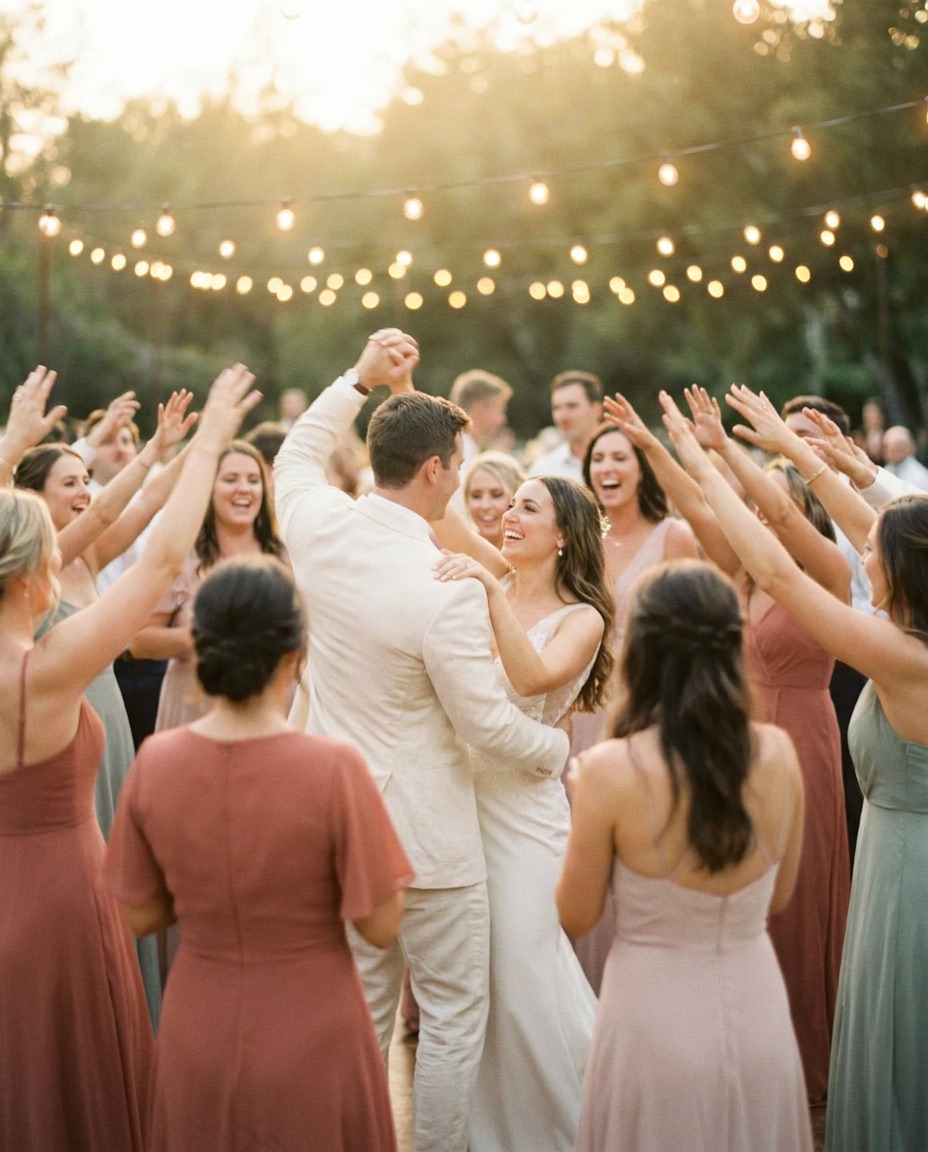
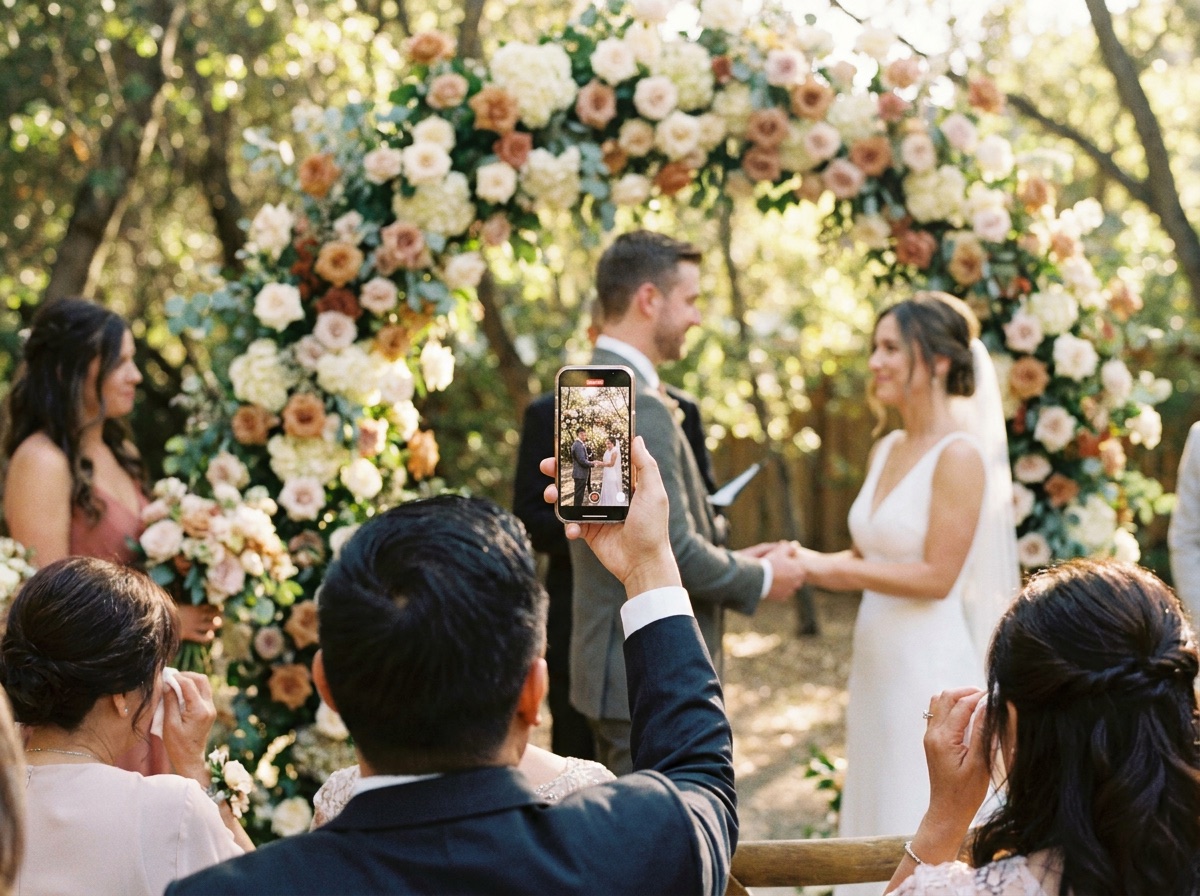
What it does not buy is coverage of everywhere at once. Not the morning in both houses, not every table during dinner, not the ceremony from the guests' seats, not the last hour after the photographer's contracted finish. Those hours are on a hundred phones in the room and they scatter into a hundred camera rolls the moment everyone goes home.
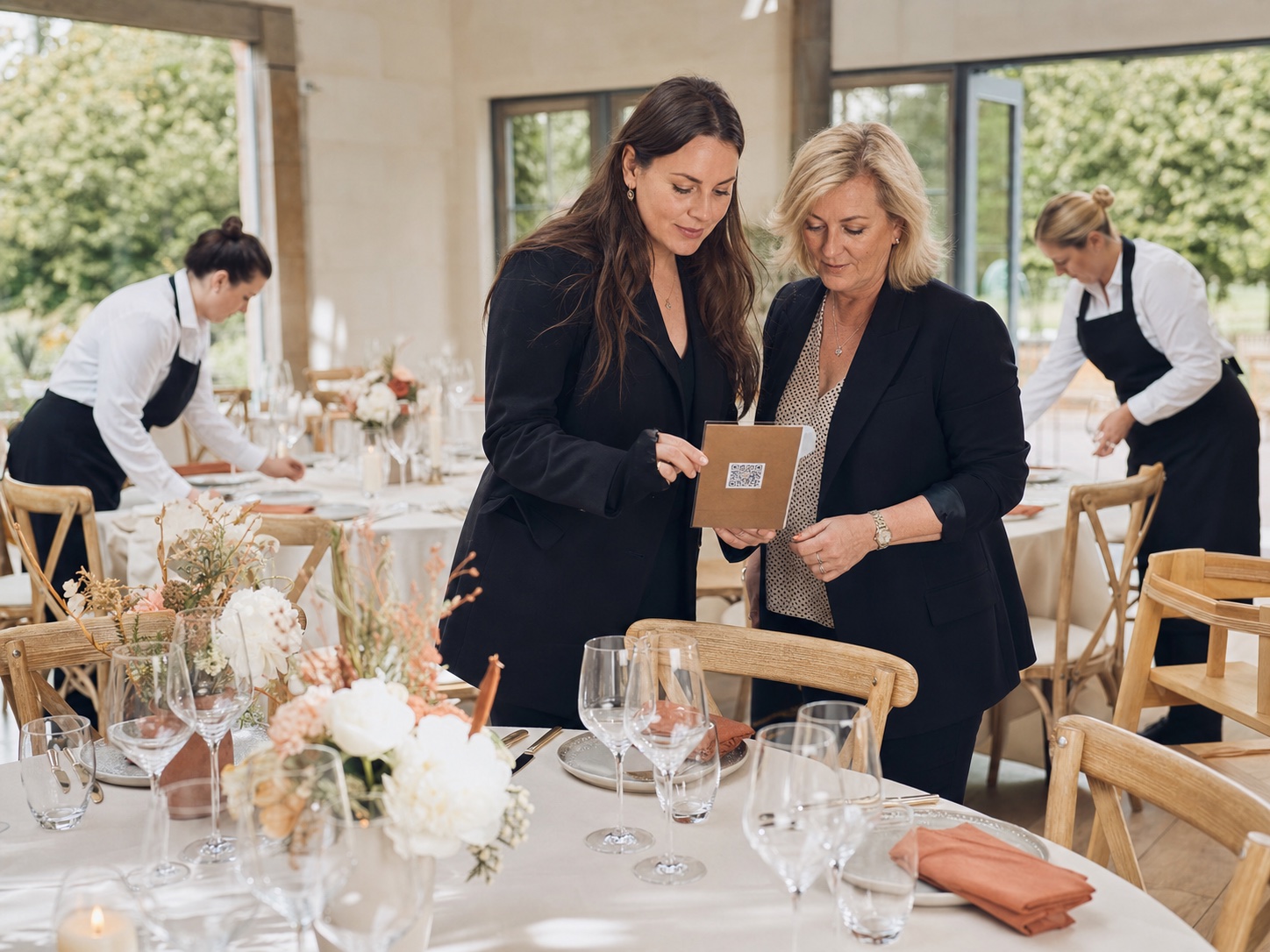
Setting up one private album is a stationery-line decision, not a photography-line one. Guests scan a code on their table, send what they took at original quality, and it lands in one place you control. Add it to the plan at the point you order signage, and you finish the wedding with both the professional gallery and everything it could not physically cover.
Preguntas, respondidas
How far in advance should we start planning?
Nine to twelve months is comfortable for most weddings. Three to four is entirely doable if you are flexible on date and venue. The planner scales its timeline to whatever you actually have.
What should we book first?
The legal paperwork, then the venue, photographer and caterer. Those three are effectively unique on your date; almost everything else has substitutes available later.
How do we cut costs without the wedding feeling cheap?
Cut the guest list first, because it moves the largest category. After that, an off-peak date or a Friday, and a venue that does not require you to hire everything separately.
Does a small wedding cost proportionally less?
No. Photography, officiant, flowers, transport and stationery barely shrink with the guest list, so the cost per guest rises sharply at the small end even though the total falls.
How much should we budget for photography?
Ten to twelve per cent of the total is typical. Remember it buys coverage from one position for a contracted number of hours, which is a different thing from a complete record of the day.
How much contingency should we hold back?
Five to ten per cent, unallocated, until the final month. It gets used at essentially every wedding, and holding it is the difference between a busy final month and a stressful one.
Do we need a wedding planner?
For a single-day wedding under about a hundred and fifty guests, usually not. For multi-day, destination, multi-venue or marquee weddings, or when neither of you has the time, a planner or day-of coordinator earns the fee.
What is the most common wedding planning mistake?
Booking a venue before agreeing a total budget. It sets the ceiling for everything else and is the hardest decision to reverse.
Is the wedding planner tool free?
Yes. No account, no email, no limit, and every calculation runs in your browser. Nothing you enter is sent to a server.